The Daily Routine
Once hired, assistants are initiated into a rigorous daily routine that revolves around Wintour’s demanding schedule. Marius divulged that she received a 21-page handbook filled with guidelines, effectively serving as a sacred text for the role. Mornings start early—though no specific time was mentioned, Wintour has noted in her MasterClass that she wakes up between 4 and 5:30 a.m.
After a morning of reading the news and playing tennis, Wintour reportedly arrives at the office around 8 a.m., where employees are already prepared for her arrival. Marius described how an assistant would set up Wintour’s coffee and breakfast and ensure her schedule for the day is organized. Taylor confirmed that Wintour is consistently the first person in the office, save for her assistants, who rush to make the necessary preparations.
Wintour keeps her task list organized digitally but prefers printed materials for important documents and emails—signifying an interesting juxtaposition between her tech-savvy tasks and a traditional approach to office organization.
The “Clackers”
Wintour’s stylistic preferences extend to her assistants’ footwear. Marius humorously recounted the transition from “clogs” to more appropriate shoes upon receiving a heads-up from Wintour’s driver that the editor was en route to Vogue HQ. Her first assistant advised that “everyone in Anna’s office wears heels,” but Marius described how practicality took precedence after just two weeks, as she switched to flats due to the pace of office demands.
The urgency inherent in Wintour’s work style means that when she requests someone, the need for immediate action is paramount. Taylor described the process of “herding” less industrious editors into meetings with Wintour, emphasizing the quick and efficient nature of the environment. Assistant participation often required physical agility, with Marius noting that she appreciated the exercise provided by the frantic pace.
Take-Home Work
While workdays may be demanding, Anna Wintour’s professional commitment extends beyond the office. Tapper explained that Wintour carries a sizable “take-home bag” each evening, filled with articles that require her edits and feedback. “This is Anna’s homework bag,” Tapper specified, revealing that Wintour makes it a point never to keep anyone waiting for her responses.
Malle affirmed the rigorous expectations, emphasizing that Wintour would review multiple articles, often totaling thousands of words, and provide detailed feedback promptly. This system showcases her commitment to maintaining high standards across Vogue’s editorial content, underscoring the relentless dedication that the role demands.
An element familiar to fans of “The Devil Wears Prada” is the infamous “book” used by Wintour, featuring dummy layouts of the magazine set to print months ahead. Each night, she takes the book home, marking it up with Post-It notes that are known for their cryptic scribbles. Taylor humorously noted the difficulty in interpreting these notes, admitting to seeking clarity from Wintour once a week about what one of her notes indicated.
The Dress Code
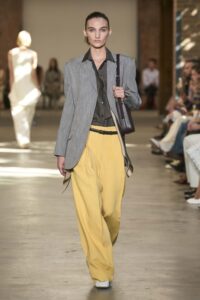
Upon entering Wintour’s office, there are unspoken guidelines governing the assistants’ attire. While heels are encouraged, the need for practical footwear is acknowledged, especially when sudden meetings arise. Taylor recounted her choice of heeled Joseph boots paired with trousers, valuing both neatness and simplicity in her daily ensemble. In contrast, Marius opted for collarless linen shirts with black pants and smoking slippers—easier to maintain given the early morning rise that comes before each workday.
“I just didn’t understand how they did that,” Taylor remarked, comparing her consistent styling with that of other assistants who seemingly wore full ensembles every single day. Tapper recalled the discomfort of wearing pumps that caused blisters before she “retired” them in favor of more comfortable options, emphasizing the necessity of adaptability in maintaining a polished appearance.
The one “unspoken rule” for assistants in close proximity to Wintour is a strict no to jeans and sneakers. While many aspects of the role were challenging, finding suitable attire was an essential part of adhering to Wintour’s well-held expectations.
As for the mythos of borrowing from the illustrious fashion closet portrayed in “The Devil Wears Prada,” the reality is that such opportunities are limited. The glamor associated with these privileges remains elusive, although there were previously noted exceptions.
Conclusion: Insights from the Inside
What emerges from the experiences of Wintour’s former assistants is a rich tapestry of dedication, resilience, and adaptation to unpredictable demands. While the allure of working for one of fashion’s most iconic figures can be intoxicating, it also comes with significant challenges that require effective navigation and an ability to thrive in fast-paced environments.
As Wintour continues to shape the future of Vogue and influence the fashion world, her former assistants’ reflections provide a valuable perspective on the complexities and realities of working in her sphere. They illustrate how her high expectations create an atmosphere that can be both inspiring and daunting, leading to profound personal growth for those willing to meet the challenge.
Ultimately, the accounts shared by Taylor, Tapper, and Marius offer a lens through which we can understand the demanding life behind the glossy pages of Vogue, revealing the dedication and commitment it takes to support the legacy of one of the industry’s most enduring icons.