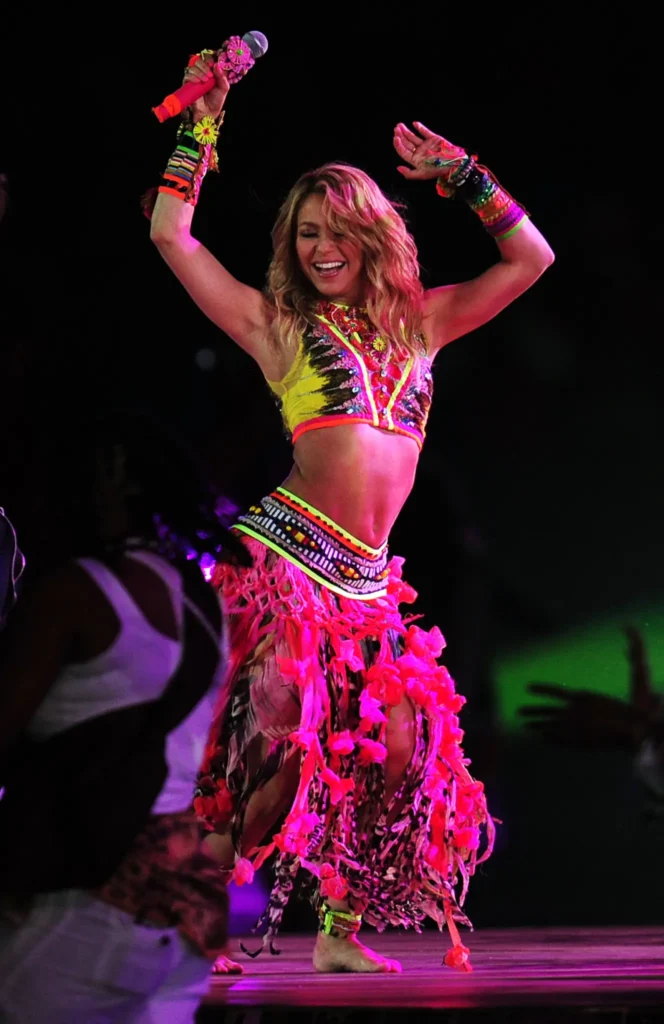
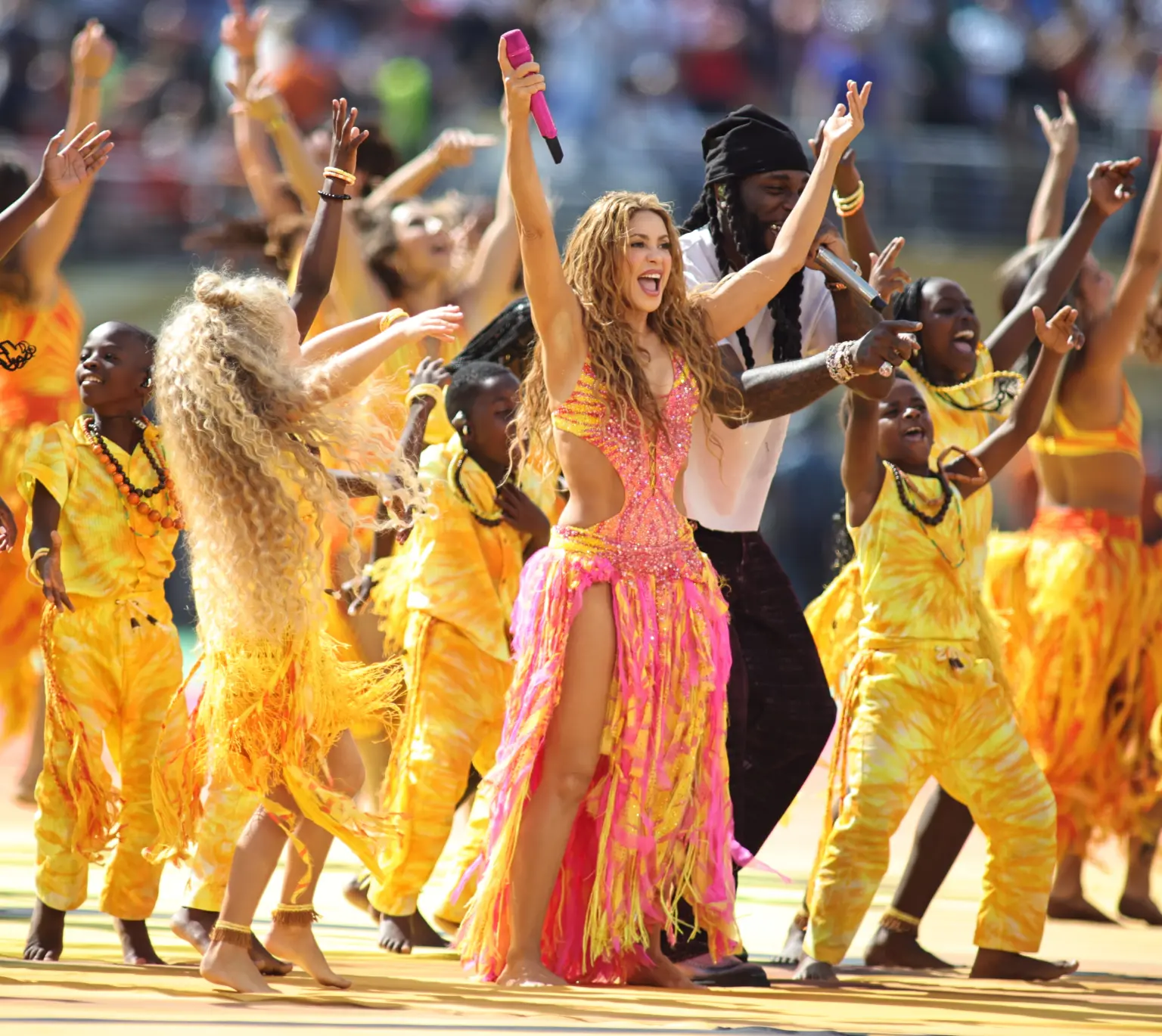
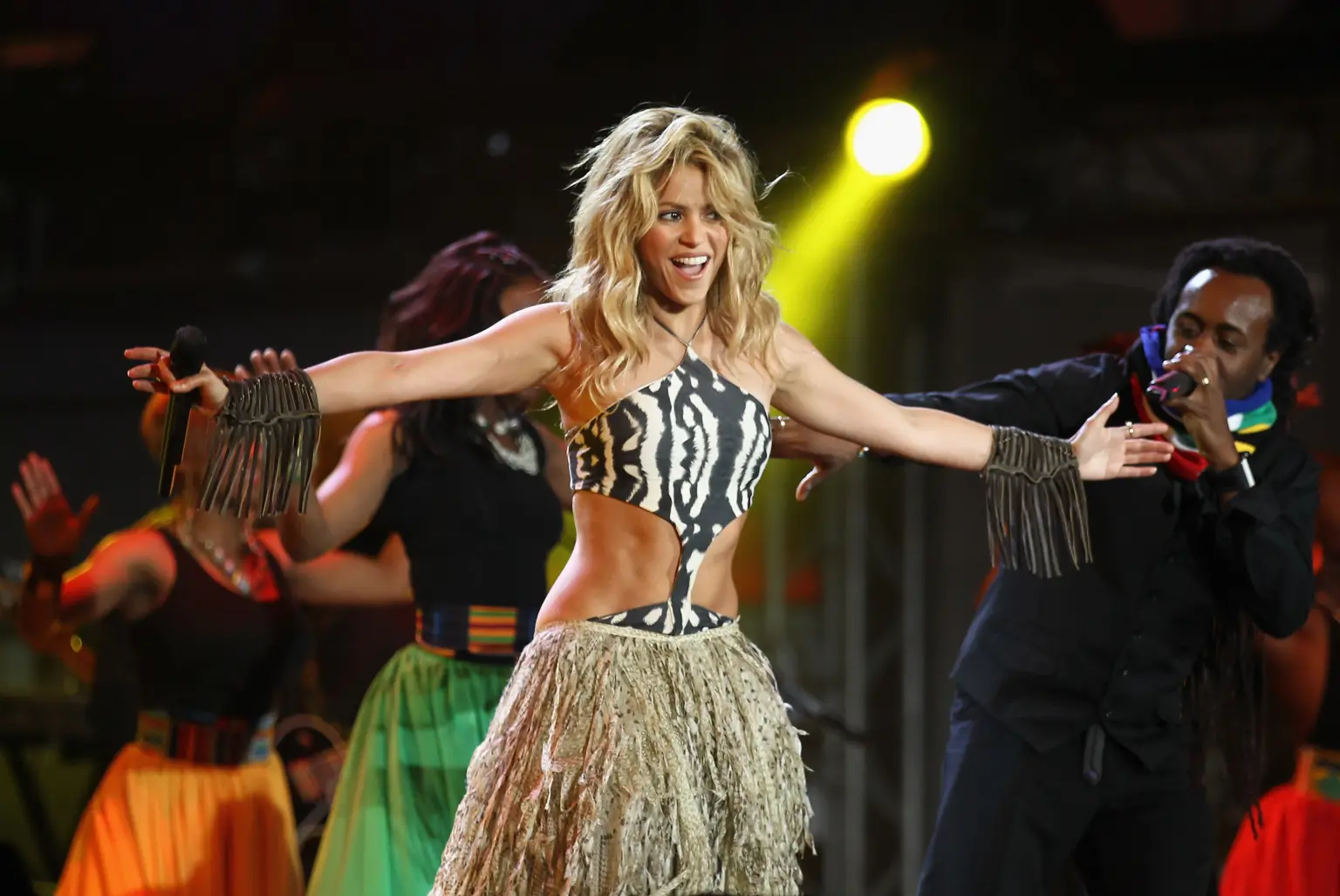
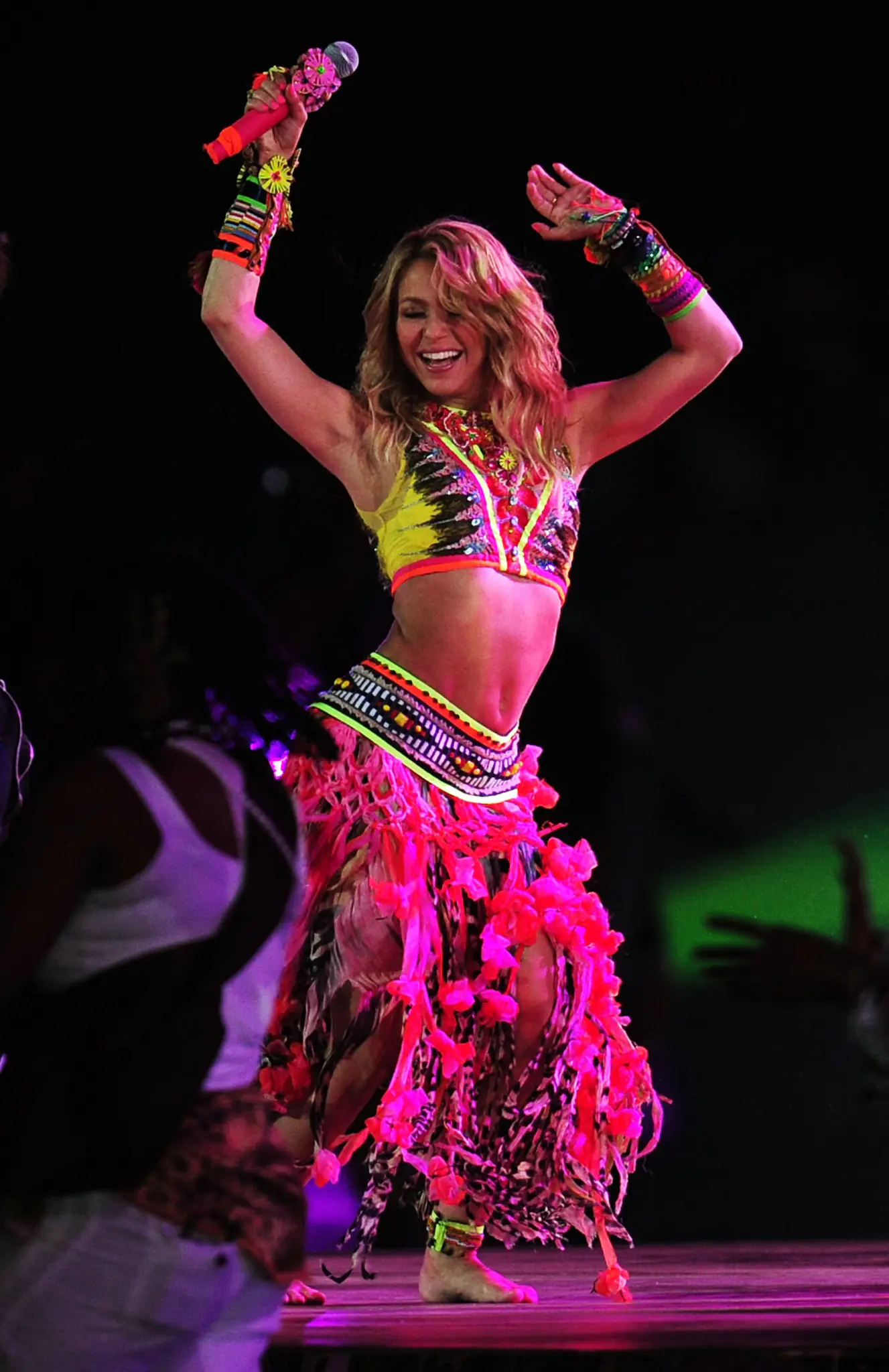
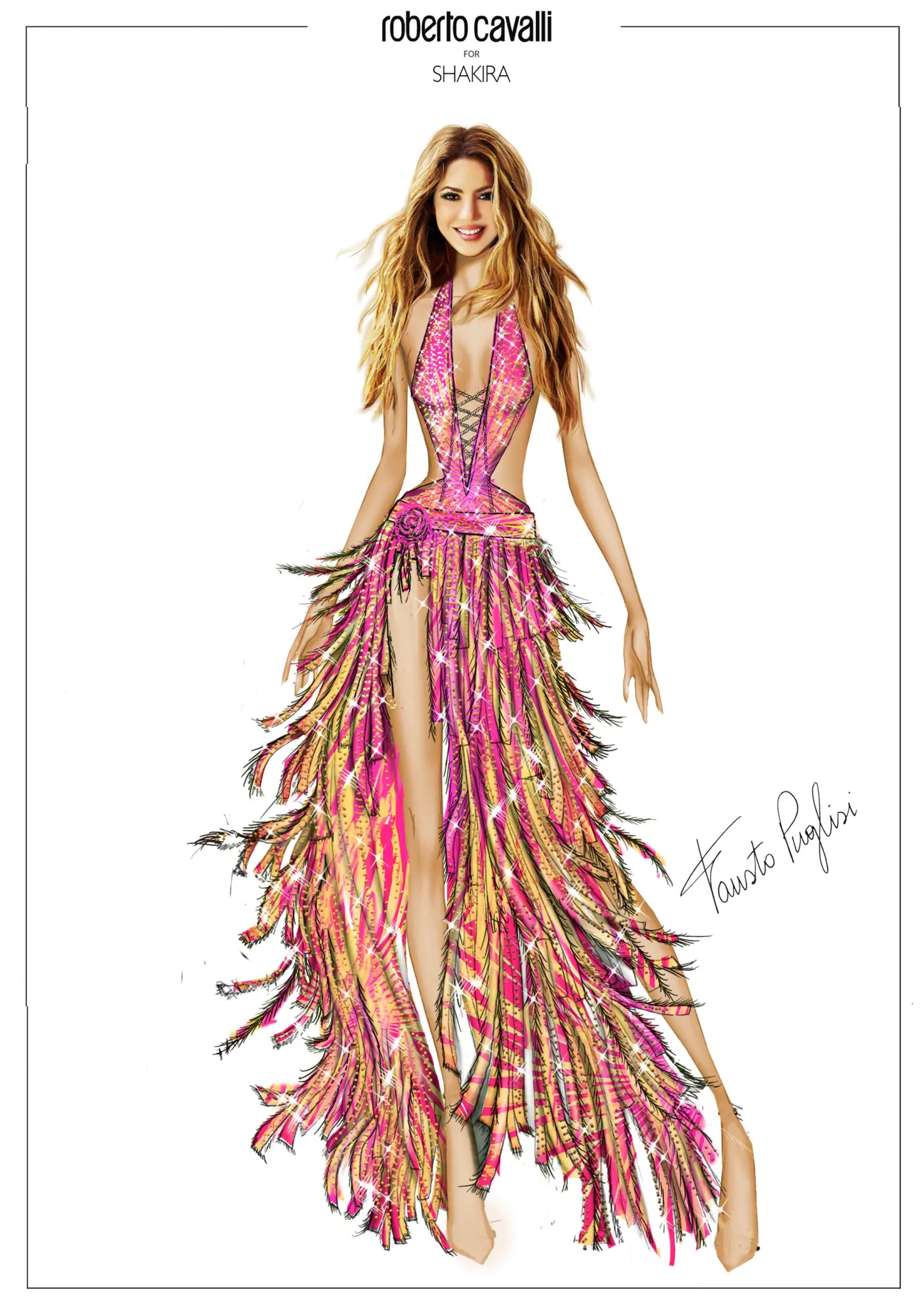
Historical resonance played a crucial role in the development of this look, as it served as a deliberate bridge between different eras of the singer’s career. The outfit acted as a direct homage to her iconic performances at the opening and closing ceremonies of the 2010 World Cup in South Africa, where she famously performed “Waka Waka (This Time for Africa).” Those earlier looks, which featured a neon crop top with a silk-fringed skirt and a black-and-white tribal-print set, were also designed by the late Roberto Cavalli himself.
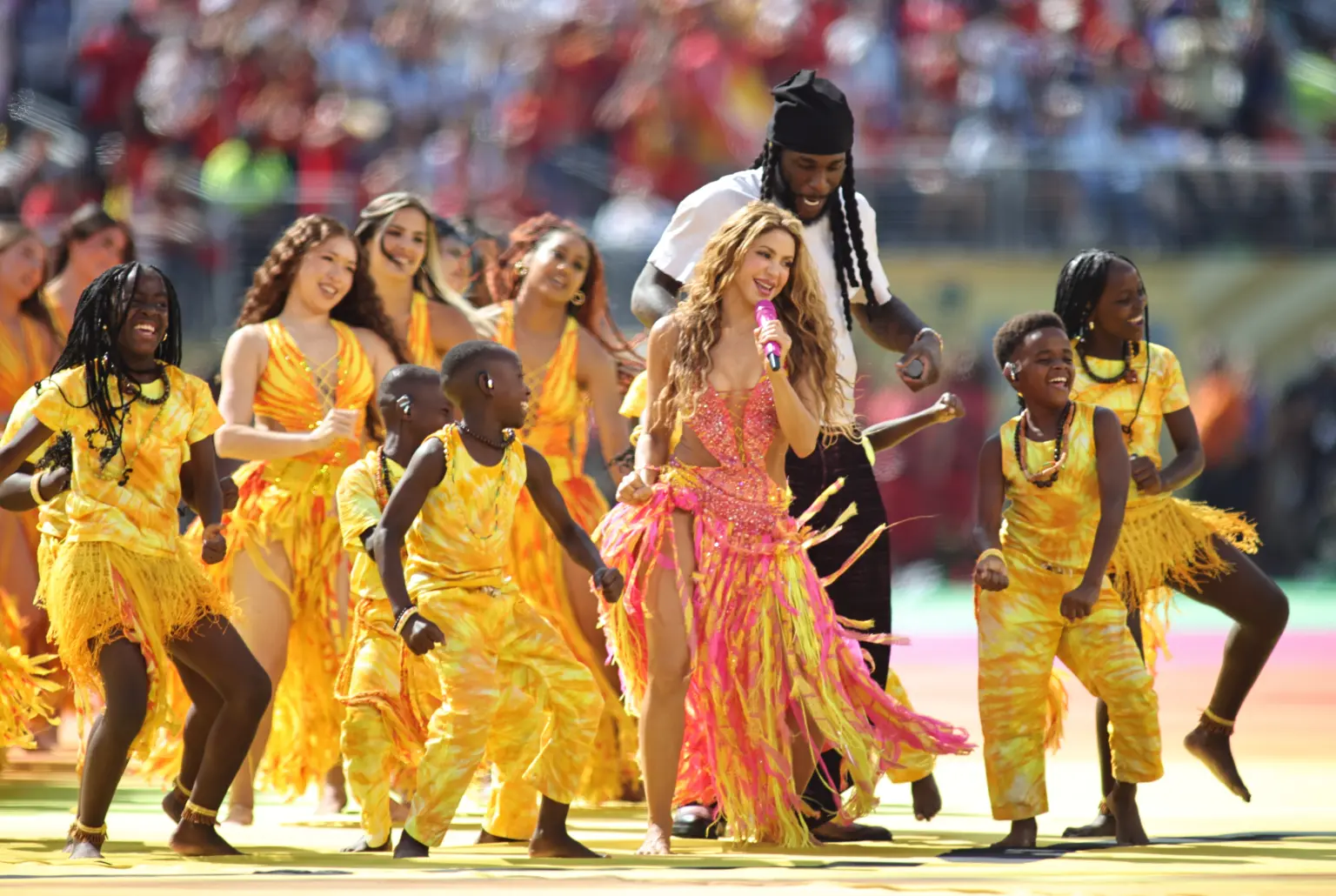
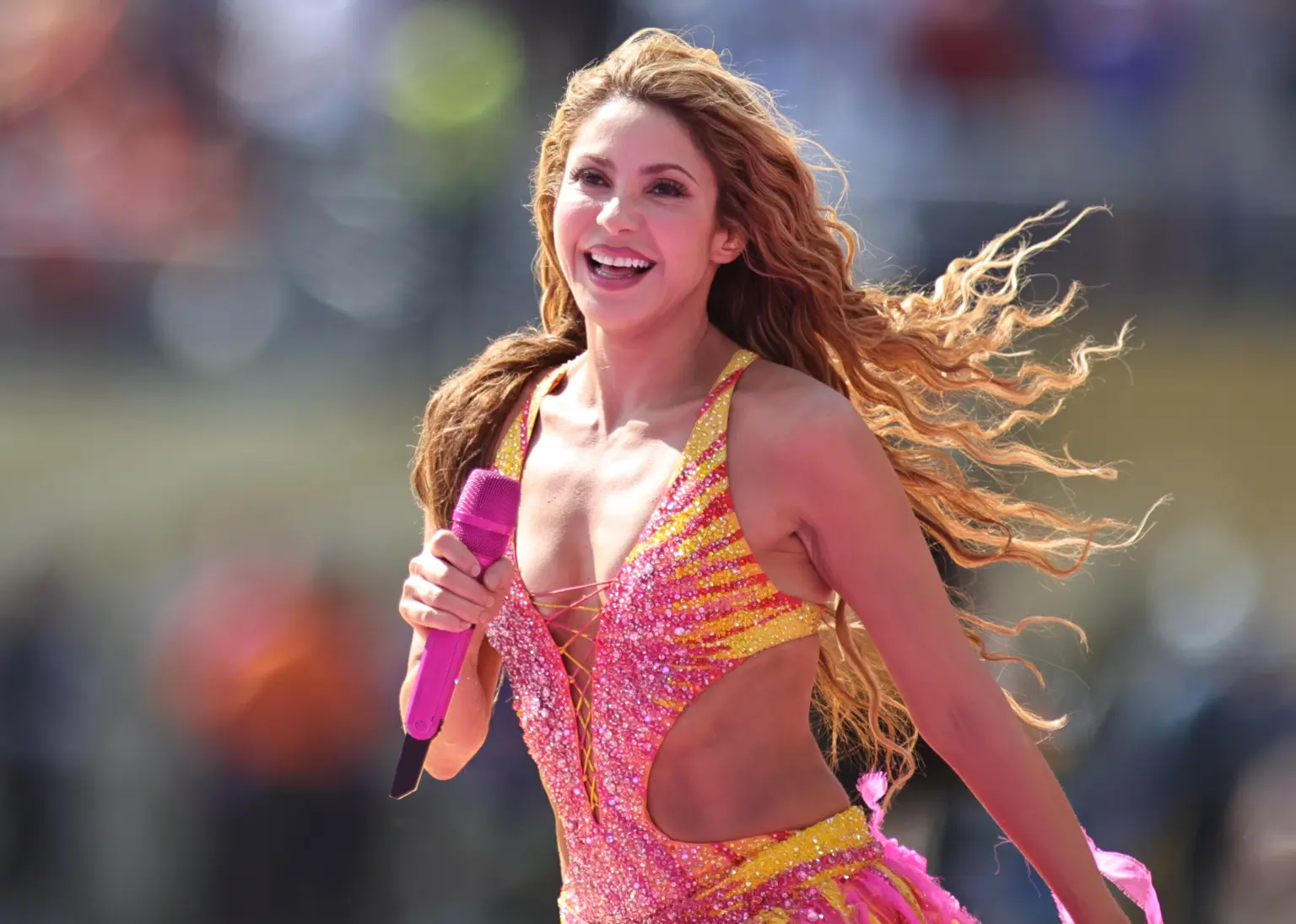
Puglisi, who has led the house of Cavalli since 2020 following the legendary designer’s passing in April 2024, approached the 2026 commission with a deep sense of responsibility. Bridging the gap between the 2010 era and the present day was not merely an aesthetic choice but a narrative one. Shakira noted that the colors were intentionally similar to her previous World Cup appearances, marking a full-circle moment that honored the past while simultaneously looking toward the future of global sports entertainment.
Performing the bulk of her set barefoot, Shakira added a raw, grounded element to the high-glamour spectacle. This choice emphasized her connection to the earth and the spontaneity of her movement, contrasting sharply with the structured, ornate nature of the bodysuit. Later, she transitioned into coordinating pink-and-yellow booties and donned gold Swarovski sunglasses to rejoin the stage alongside the PS22 Chorus for a powerful finale. The inclusion of the choir added a layer of vocal depth and communal spirit that elevated the performance from a solo act to an inclusive, uplifting experience.
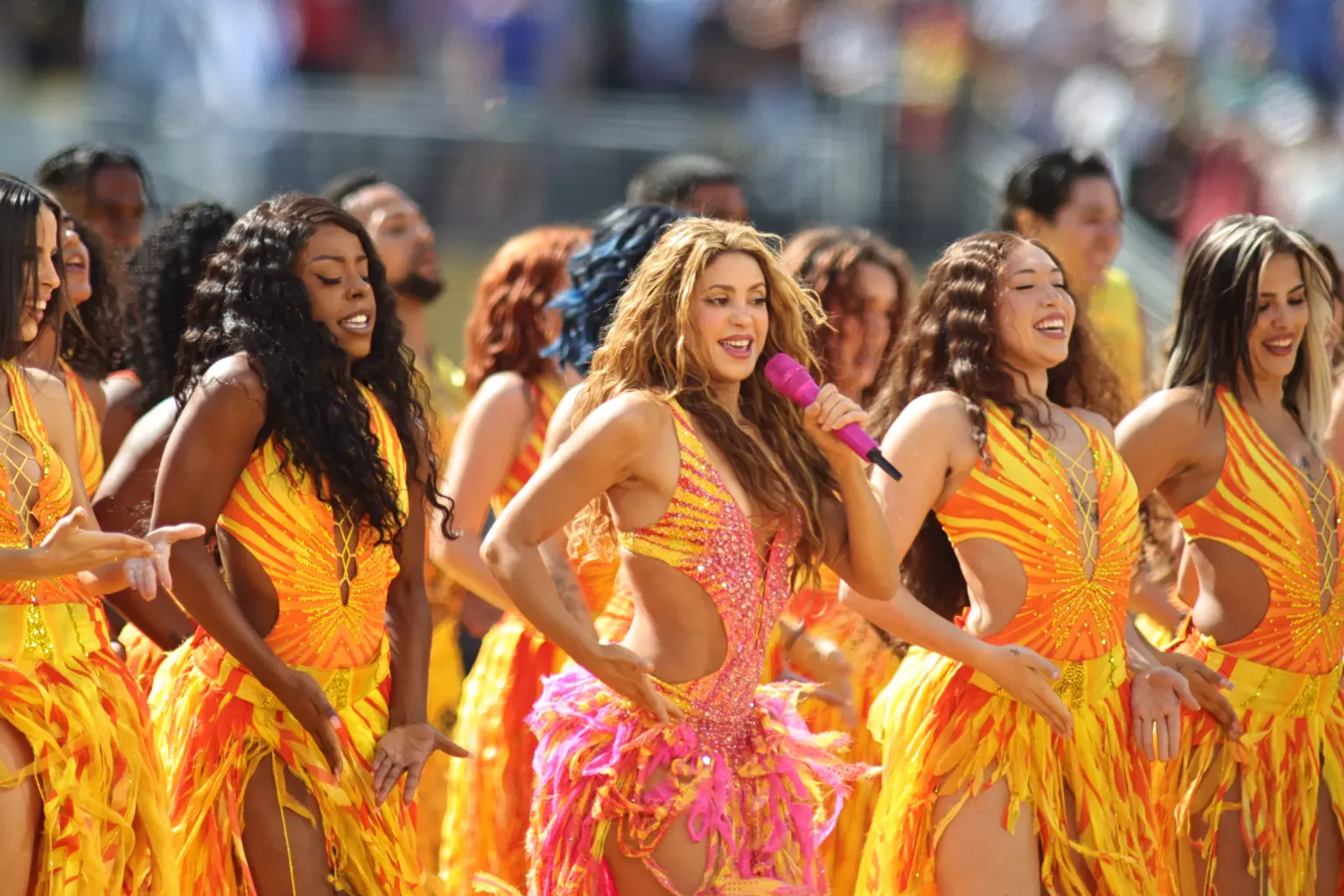
Uniformity was a key component of the visual impact, as the 34 backup dancers were also dressed in Roberto Cavalli designs. They appeared in two variations of the same sunset palette, with one group wearing a crisscross crop top paired with a matching skirt, and the other sporting a sleeveless tee combined with baggy trousers. This coordinated visual language ensured that the performers moved as a single, fluid organism, reinforcing the theme of harmony that the World Cup seeks to promote.
Curated by Coldplay’s Chris Martin for the FIFA Global Citizen Education Fund, the halftime show was an ambitious undertaking that brought together a diverse array of global talent. Beyond Shakira’s headline set, the production featured performances by Madonna, Justin Bieber, and BTS, with the renowned conductor Gustavo Dudamel leading the orchestra. The sheer breadth of the lineup highlighted the tournament’s commitment to bridging cultural divides through the universal languages of music and sport.
Fashion at the World Cup has evolved significantly over the years, moving from simple, functional attire to elaborate, symbolic displays of identity and artistry. Shakira’s decision to work with a storied house like Roberto Cavalli underscores the increasing intersection of high fashion and sports, where the stadium serves as a global runway. The meticulous attention to detail—from the 120 hours of crystal application to the specific architectural inspiration from Mexico City—demonstrates that these performances are no longer just interludes; they are meticulously crafted spectacles that hold cultural weight.
Cultural impact remains a cornerstone of such high-profile events. By weaving together the threads of her past performances with a fresh, contemporary vision, Shakira reinforced her status as a global icon who is capable of evolving while maintaining her core identity. The sunset theme, with its connotations of both endings and new beginnings, served as a poignant backdrop for a tournament that brought the world together during a time of significant global transformation.
Designers like Puglisi understand that when a star of Shakira’s magnitude takes the field, the outfit must perform as much as the singer. Every facet of the garment—the cutouts, the chiffon layers, the weight of the crystals—was engineered to enhance the kinetic energy of the show. The result was a seamless integration of movement and material, where the clothes did not merely adorn the performer but actively participated in the storytelling process.
Audiences watching from every corner of the globe were treated to a display that celebrated the vibrancy of Latin American heritage. The specific choice of colors and the homage to the 2010 ceremonies served to remind viewers of the enduring power of the World Cup to create shared memories. It is a rare phenomenon when the spectacle of a halftime show manages to capture the zeitgeist so effectively, but the combination of heritage-focused design and world-class musical talent achieved exactly that.
Reflecting on the legacy of the Roberto Cavalli brand, it is clear that the creative direction under Puglisi remains dedicated to the house’s signature bold, maximalist aesthetic. Yet, by integrating the personal history of a performer like Shakira, the brand has demonstrated an ability to adapt its house codes to serve the narrative needs of the artist. The collaboration stands as a testament to the fact that luxury fashion can be both deeply personal and globally accessible when executed with such precision and intent.
Looking ahead, the 2026 World Cup halftime show will likely be remembered as a benchmark for future productions. It demonstrated that by focusing on narrative, historical continuity, and artistic collaboration, organizers can create moments that resonate far beyond the confines of the stadium. The sunset-inspired ensemble will remain a visual touchstone for this tournament, representing a moment where fashion, music, and the spirit of global competition converged in a brilliant, crystal-encrusted display of unity.
Success in such a massive undertaking requires more than just talent; it requires a vision that respects the past while daring to innovate. Shakira’s performance was a masterclass in this balance, reminding the world that while the game on the pitch is the central focus, the celebration surrounding it is what gives the event its soul. The echoes of the music and the lingering image of that sunset-inspired outfit will serve as a reminder of a moment when the world stood still to watch a performance that felt both timeless and entirely of the moment.