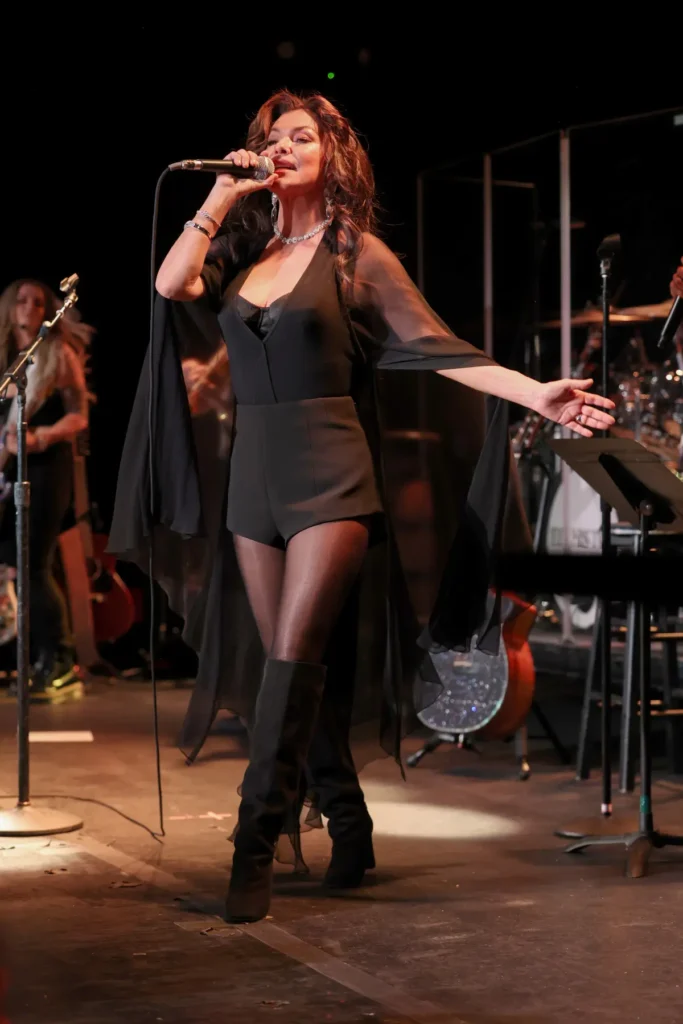
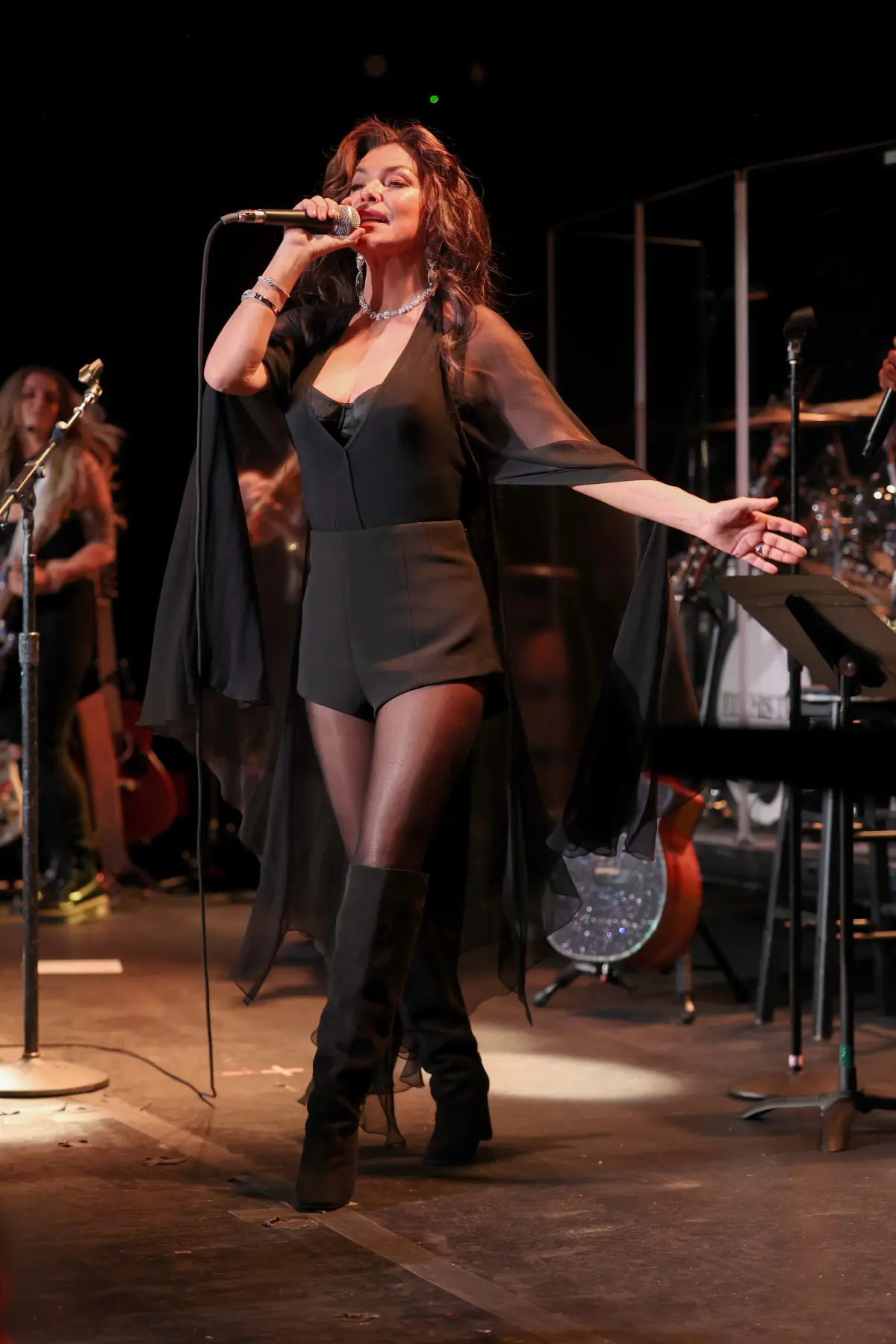
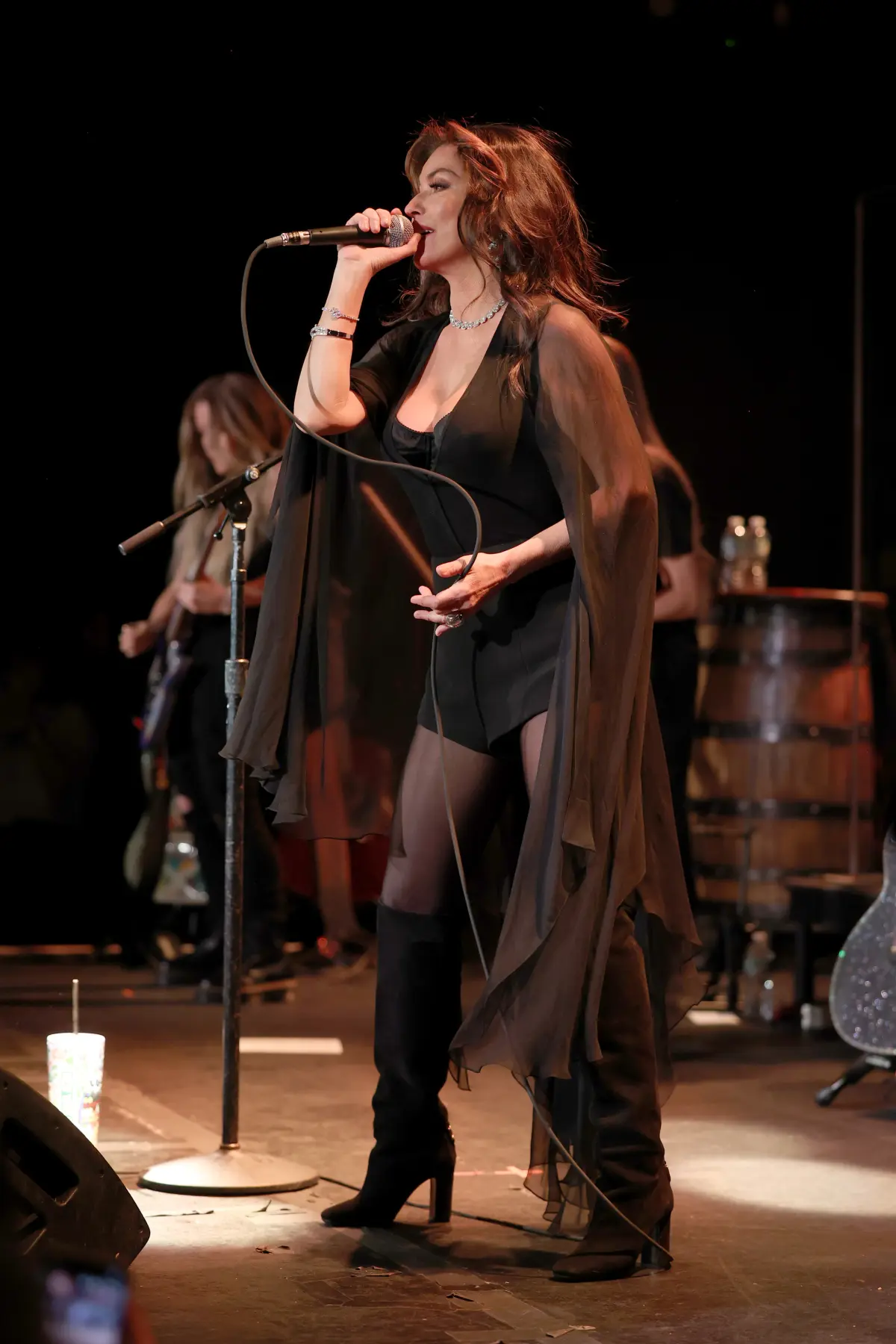
Personal histories took center stage as Twain shared the inspirations behind her newest compositions. She spoke candidly about her upbringing in Ontario, Canada, painting a picture of a young girl with grand ambitions and limited means. One of the night’s most poignant moments arrived when she introduced “Faded Blue Jeans,” a track featuring Queens of the Stone Age frontman Josh Homme. The song serves as a nostalgic exploration of young love and the iconic denim she wore in the 1995 music video for “Any Man of Mine.” To the delight of the audience, she confirmed that she still possesses those very jeans, a tangible artifact of a career that has spanned generations.
Family served as a central theme throughout the show, adding an emotional weight to the performance. Twain’s parents, who tragically died in a car accident when she was only twenty-two, were clearly on her mind as she navigated the tracklist. The title track, “Little Miss Twain,” was presented as a love letter to her mother, highlighting the sacrifices made to support her daughter’s early aspirations of becoming the “next Tanya Tucker.” In a moment of genuine serendipity, the legendary Tanya Tucker herself provides vocals on the recorded track, marking a full-circle moment that Twain clearly cherishes. The presence of Twain’s own sister in the audience, who received a heartfelt shoutout from the stage, underscored the importance of family continuity in the artist’s life.
SiriusXM’s involvement in the event highlighted the massive industry support behind her current project. To celebrate the album’s release, the satellite radio giant launched Little Miss Twain Radio, a dedicated pop-up channel that will explore her entire discography and the musical influences that shaped her sound. This initiative is a testament to her ongoing relevance, proving that her catalog is not merely a relic of the past but a living, breathing influence on modern music. The channel serves as a retrospective, inviting listeners to trace the evolution of a voice that helped define the sound of the nineties and early two-thousands.
Audience participation remained at a fever pitch throughout the night. Hits like “Man! I Feel Like A Woman!,” “Come On Over,” and “You’re Still The One” were delivered with a freshness that belied their age. There was no sense of fatigue or obligation in the performance; rather, it felt as though she was rediscovering these songs alongside her fans. The intimacy of the venue allowed for a level of connection that is often lost in larger arenas, with every lyric sung back to her by a room full of people who have grown up with her music as the soundtrack to their own lives.
Professional longevity in the music industry is an elusive goal, yet Twain has managed to navigate the peaks and valleys of fame with a resilience that is rarely seen. Her ability to pivot from the high-gloss production of her earlier eras to the stripped-back, narrative focus of Little Miss Twain suggests a performer who is no longer chasing trends. Instead, she is defining her own space, one that allows for both the pop-star persona and the authentic, storytelling songwriter to coexist.
Critics often point to her vocal delivery, which has remained remarkably consistent over the years, as a key factor in her endurance. However, it is her ability to connect with the emotional reality of her audience that truly distinguishes her work. The stories she shares—of poverty in Ontario, of the loss of her parents, and of the joy of finding success on her own terms—resonate because they are delivered with a sense of honesty that feels earned. She does not shy away from the darker moments of her history, nor does she let them define the entirety of her current output.
Racket NYC was the perfect setting for this specific moment in her career. It provided a space for the artist to be seen not just as a global superstar, but as a woman who has lived a full and complex life. The juxtaposition of the high-fashion, diamond-heavy ensemble and the raw, acoustic-leaning stories created a tension that kept the audience engaged from the first note to the last. It was a reminder that the “Queen of Country Pop” title is not just a marketing label; it is a description of a legacy that has been built on a foundation of hard work and genuine talent.
As the final notes of the evening faded, the feeling in the room was one of profound satisfaction. Fans left with the knowledge that they had witnessed something unique—a performer who is at peace with her past and excited about her future. The launch of the new album and the accompanying radio channel are only the beginning of this new phase, suggesting that there is plenty more to come from an artist who has already given so much to the world of music.
Looking at the trajectory of her career, it is evident that her influence will continue to be felt for years to come. The younger generation of country artists frequently cites her work as a primary inspiration, and the presence of collaborators like Josh Homme on her new record shows that she is continuing to push the boundaries of her sound. By staying true to her roots while embracing new avenues for expression, she has managed to remain at the forefront of the cultural conversation.
Musical evolution is a difficult process for any artist, particularly one with a back catalog as iconic as hers. Yet, she has navigated this challenge with a grace that has won over both long-time devotees and new listeners alike. The intimate nature of the show served as a perfect microcosm of her current approach: focused, intentional, and deeply committed to the craft of songwriting.
Every song performed on that stage carried the weight of history, yet none of them felt dated. This is the hallmark of a true classic—the ability to remain relevant regardless of the era in which it is heard. Whether she is singing about the denim of her youth or the sacrifices made by her mother, the underlying truth of her message remains the same. Shania Twain has always been about the power of the individual to overcome obstacles and find their own voice, a theme that continues to drive her work today.
Reflecting on the night as a whole, it is clear that the energy and passion she brings to the stage are not waning. The diamond-encrusted outfit may have been the first thing to catch the eye, but it was the strength of her voice and the depth of her storytelling that left the lasting impression. As she looks toward the future with Little Miss Twain, she does so as an artist who has nothing left to prove and everything left to share.