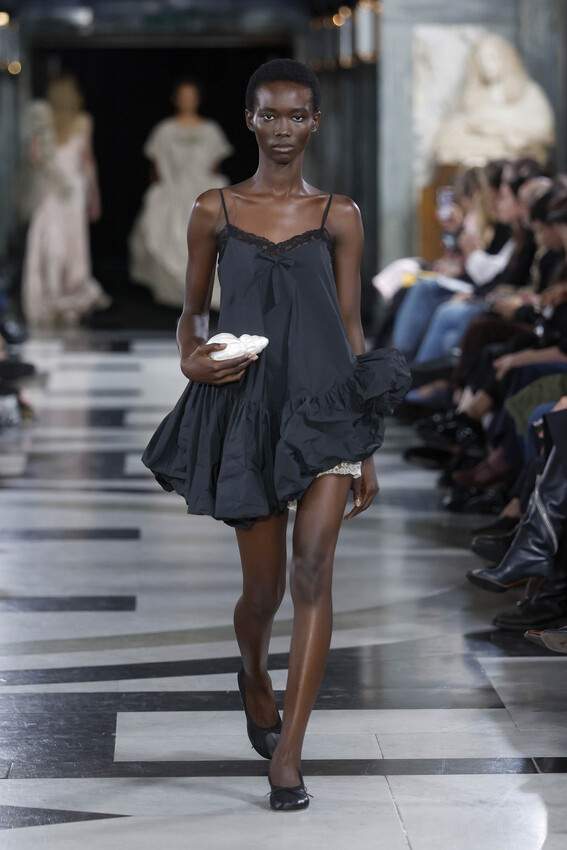
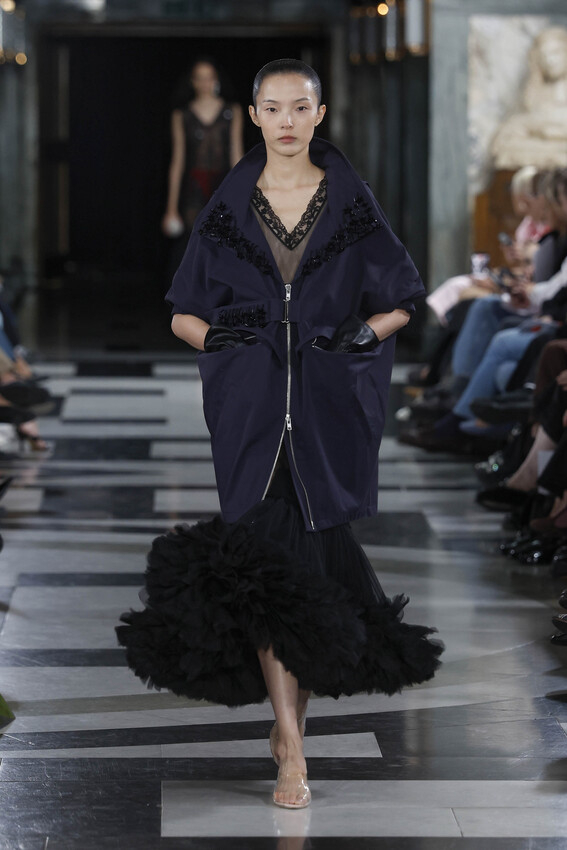
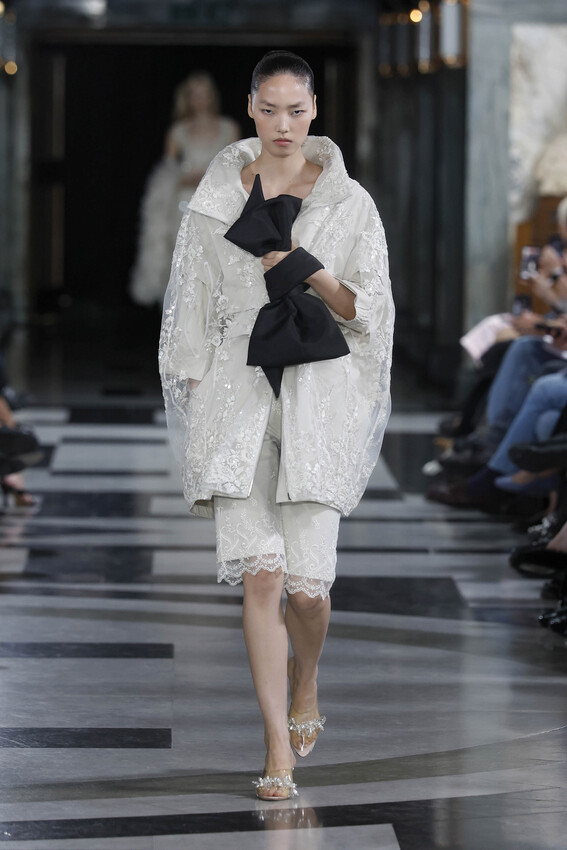
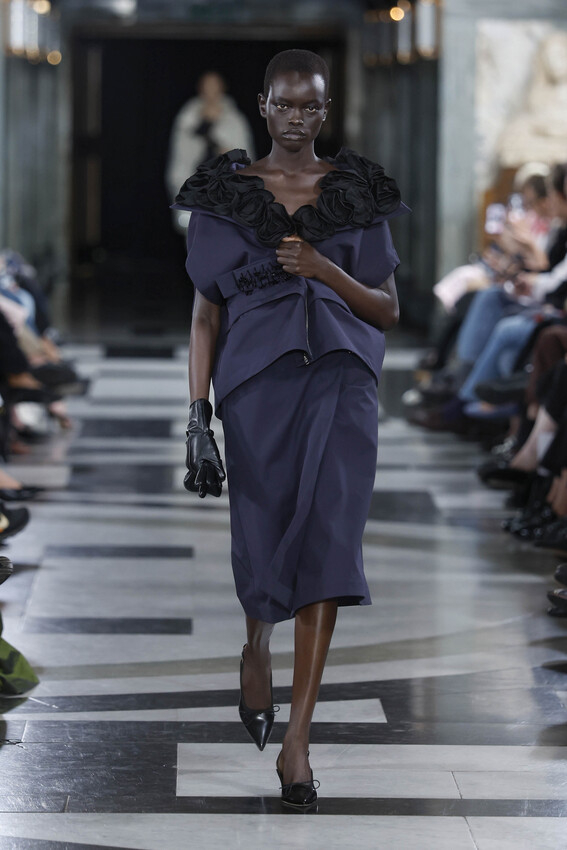
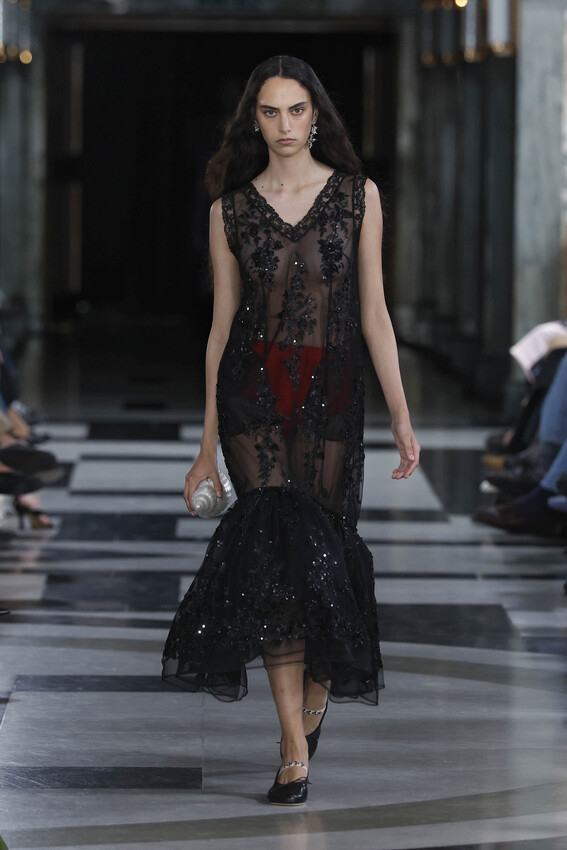
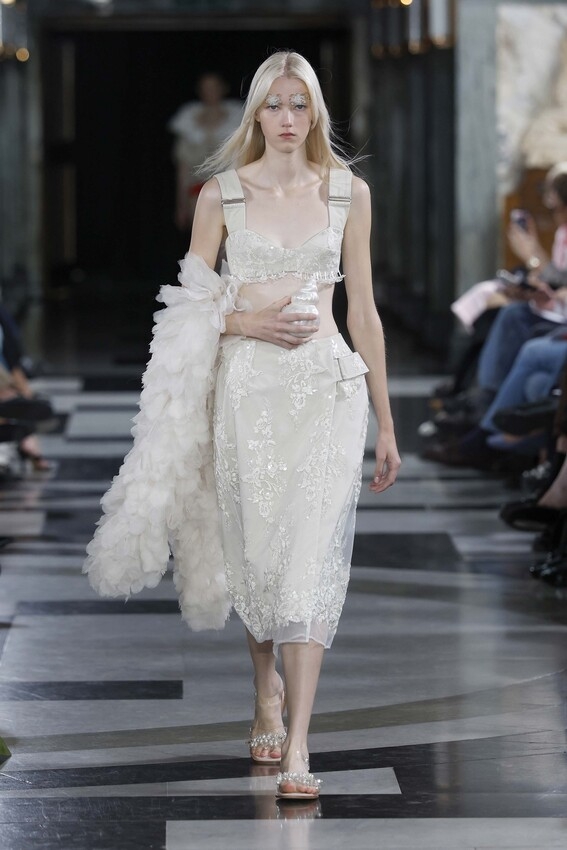
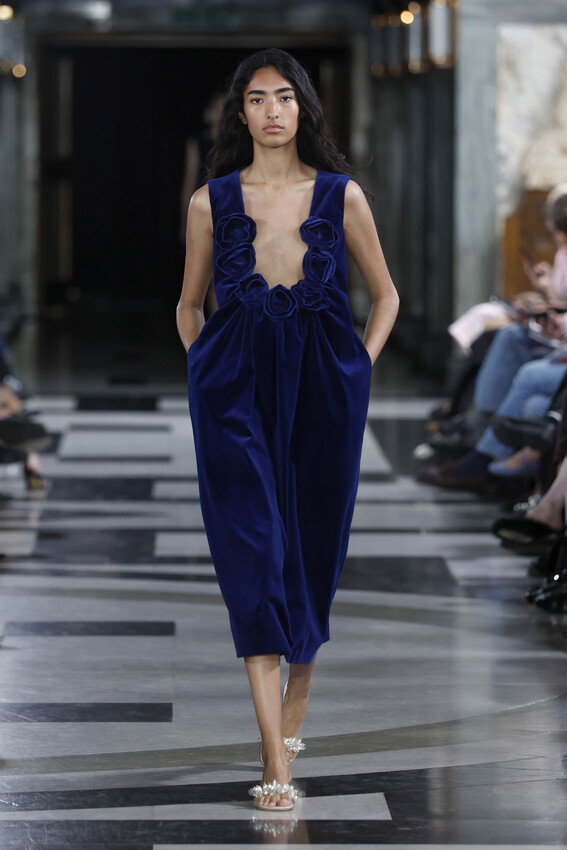
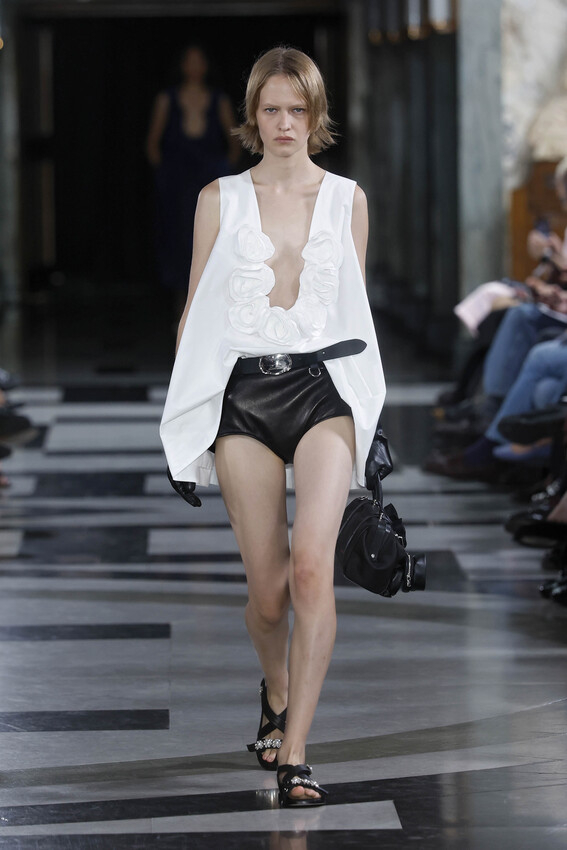
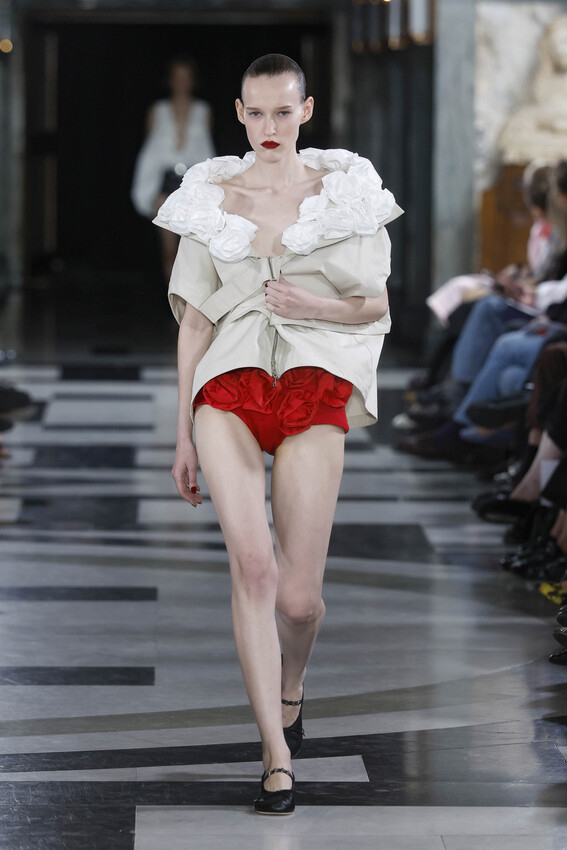
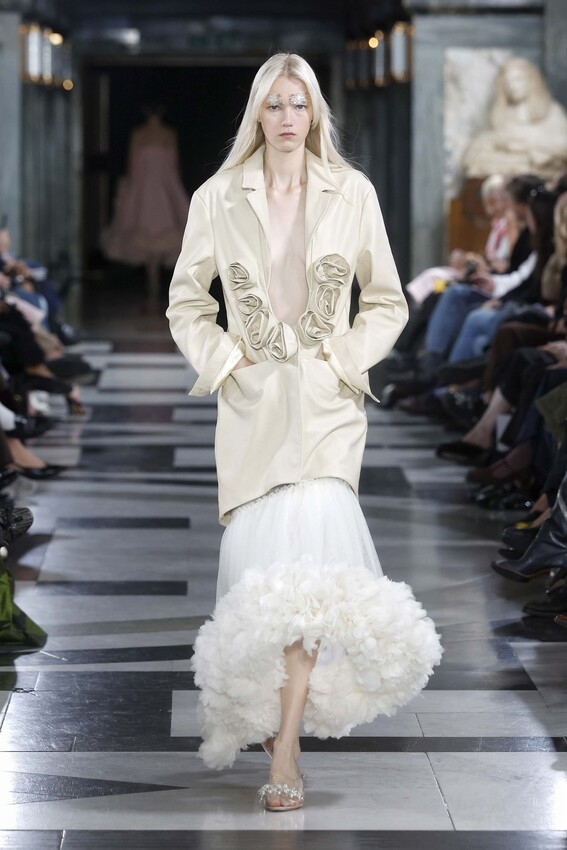
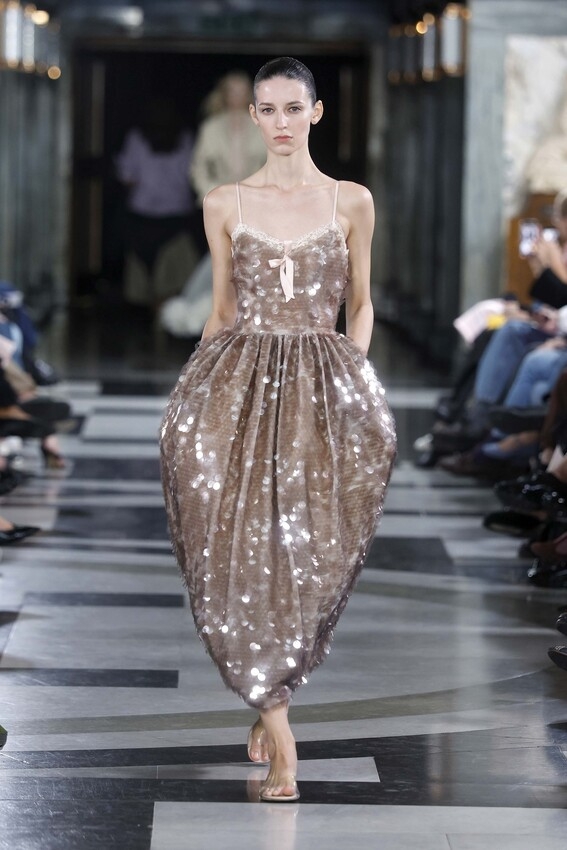
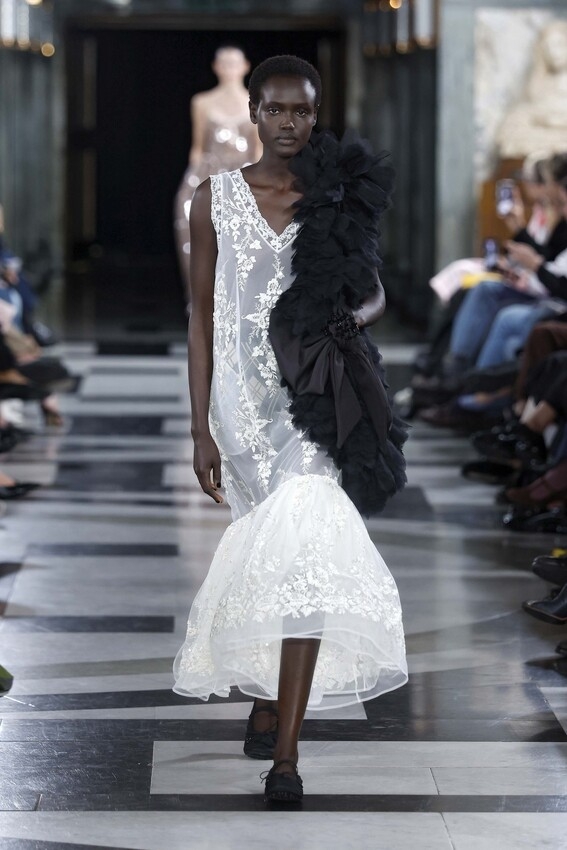
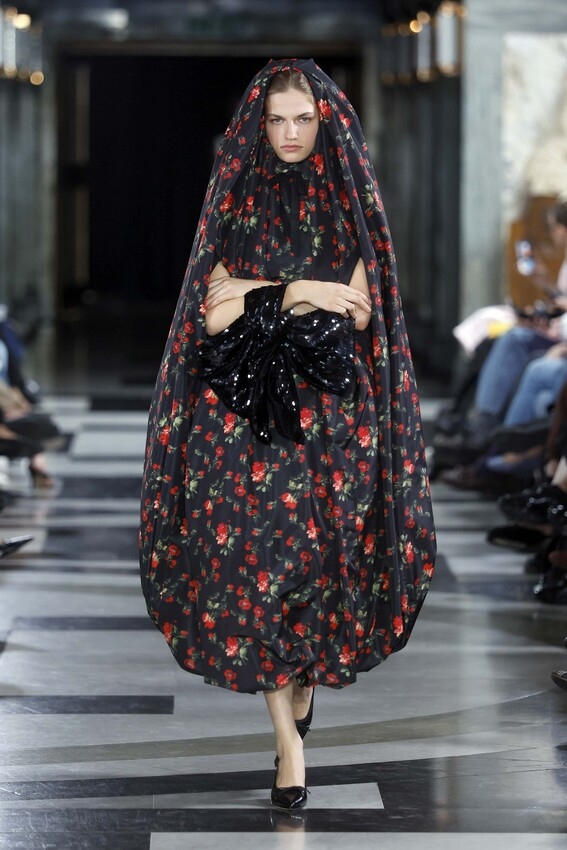
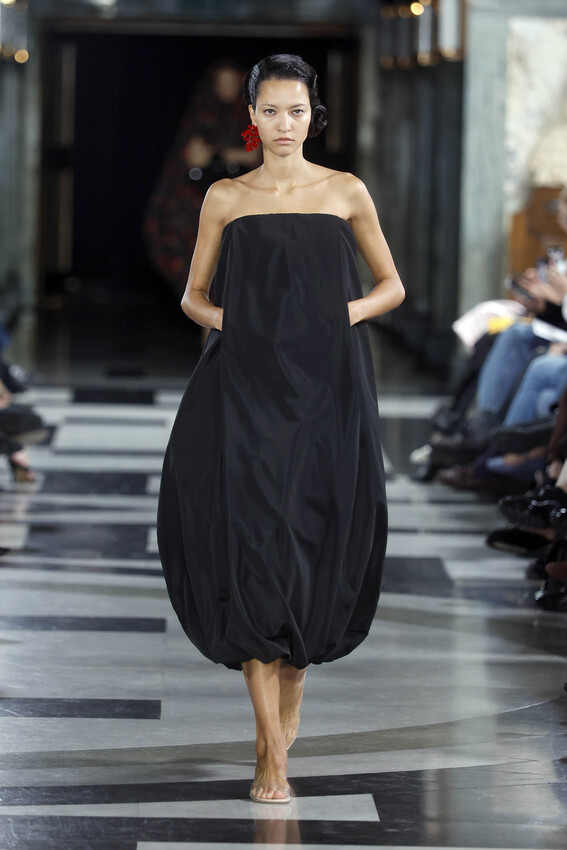
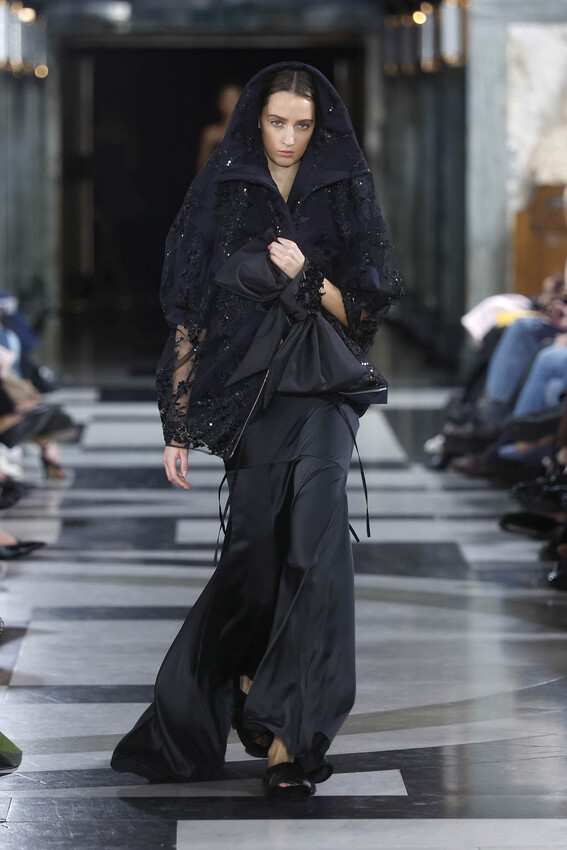
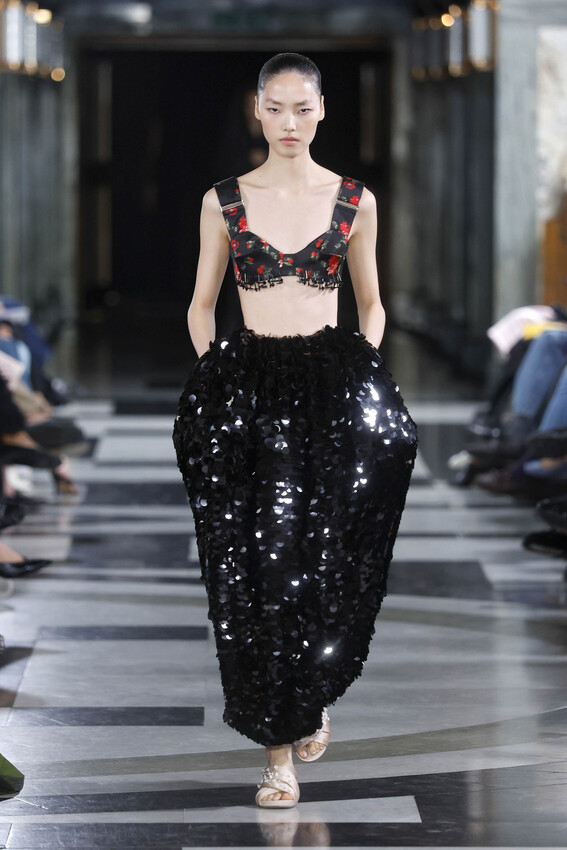
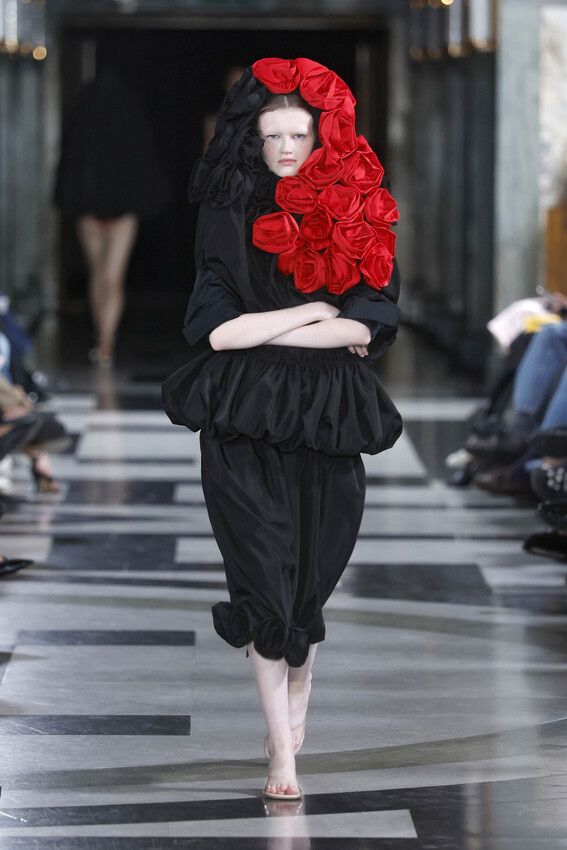
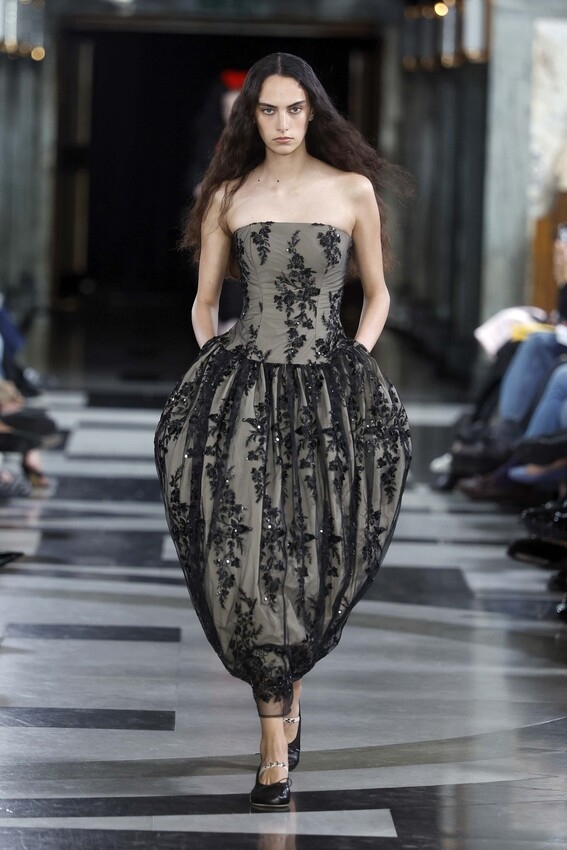
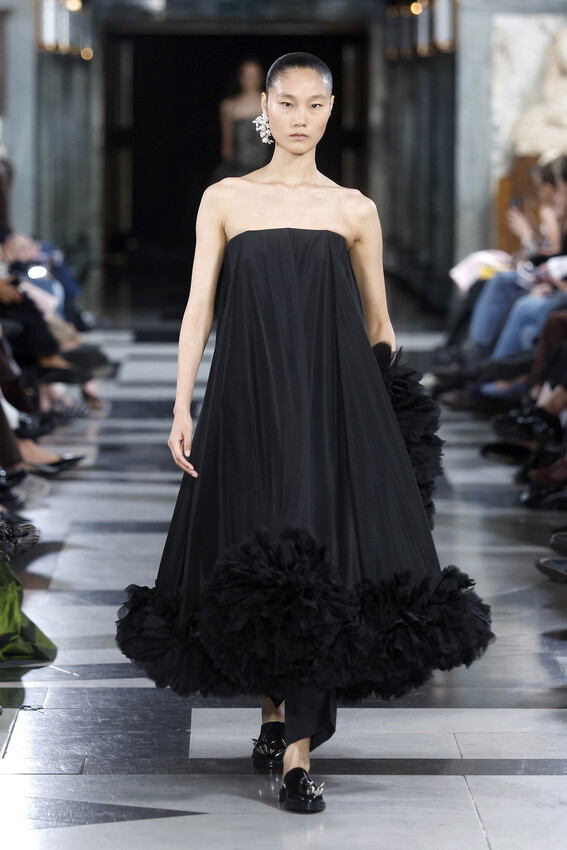
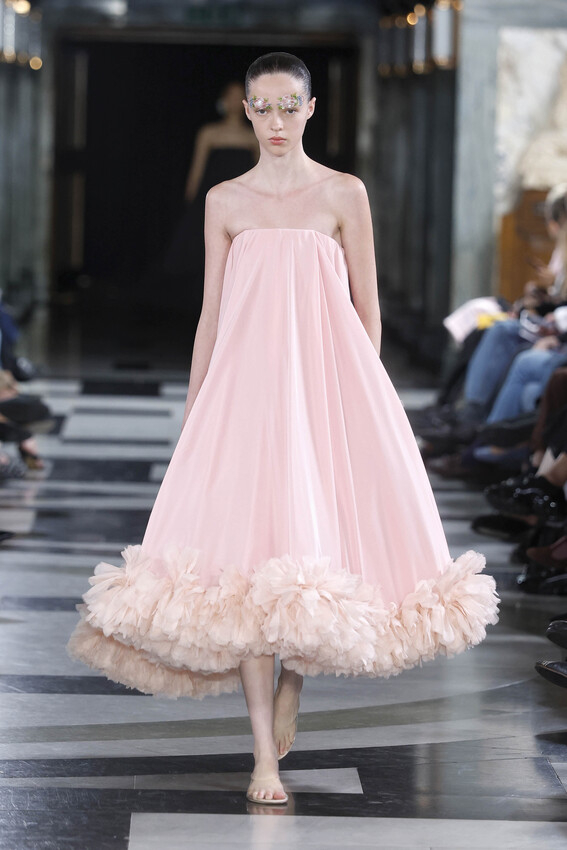
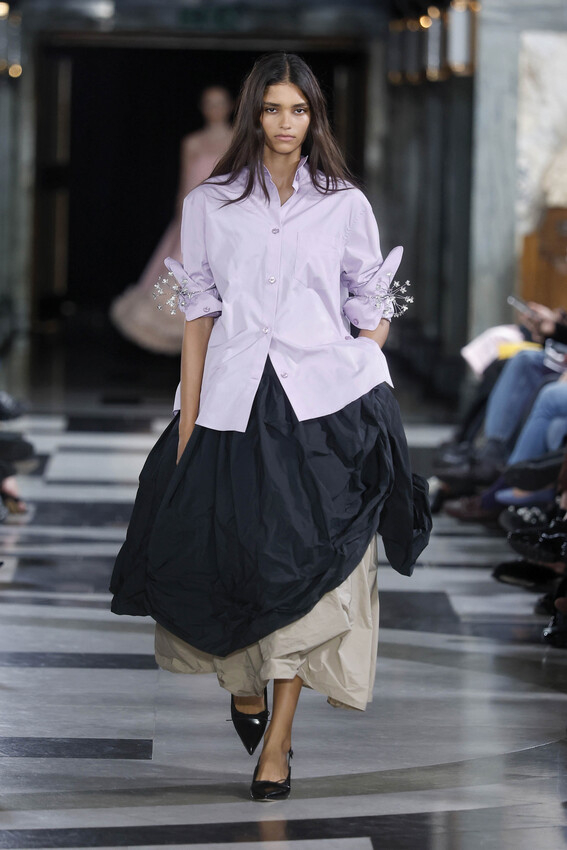
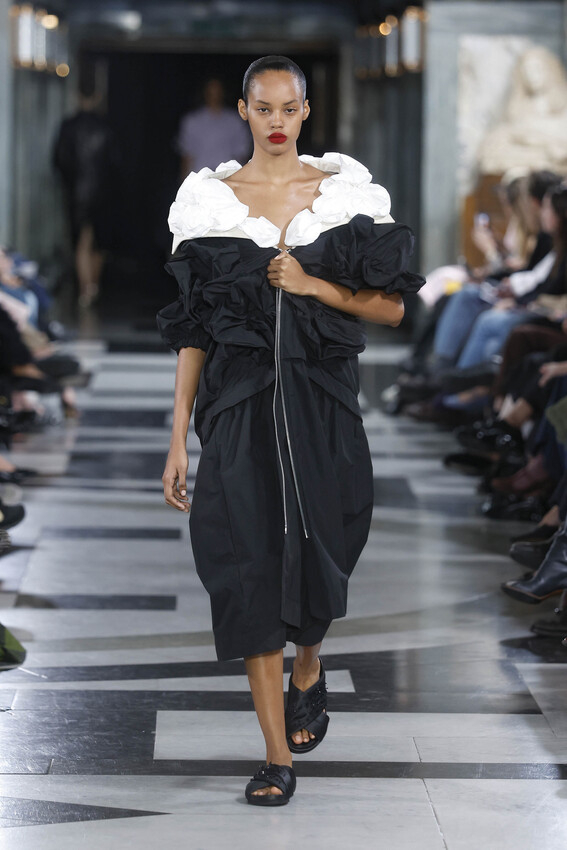
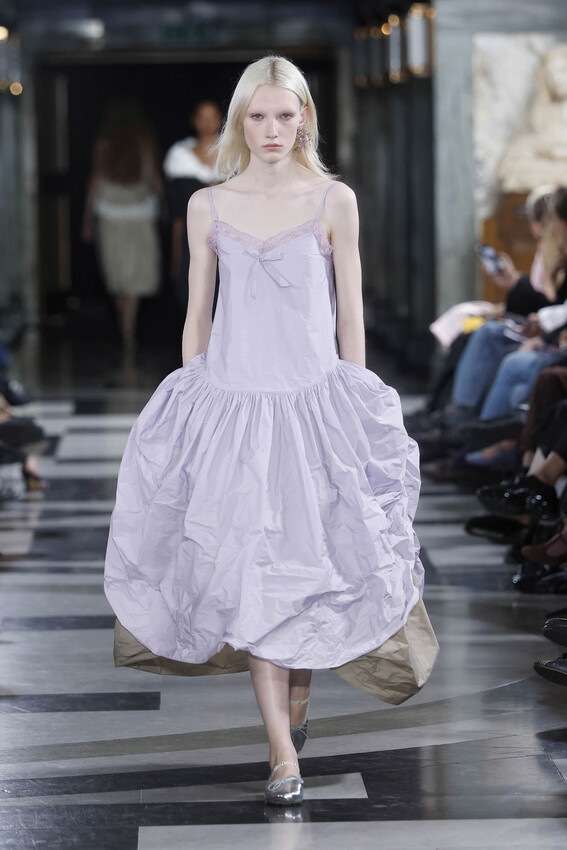
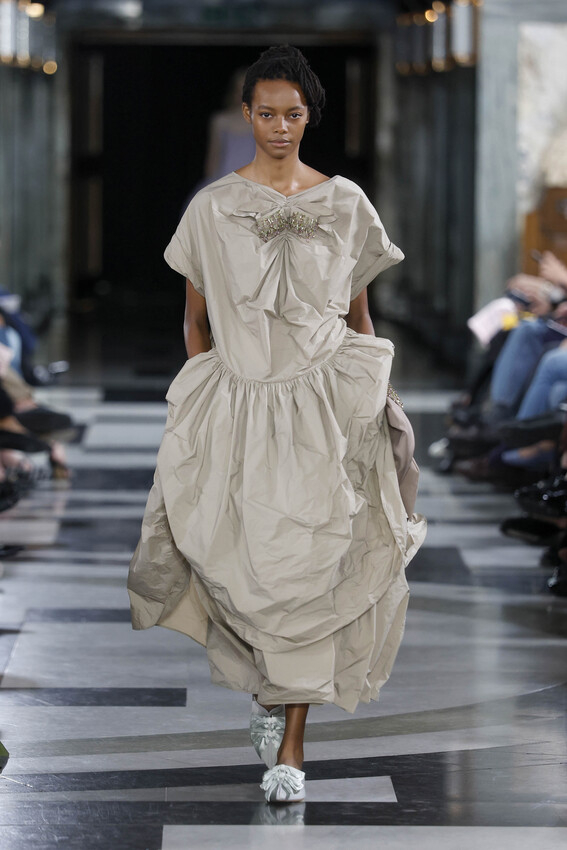
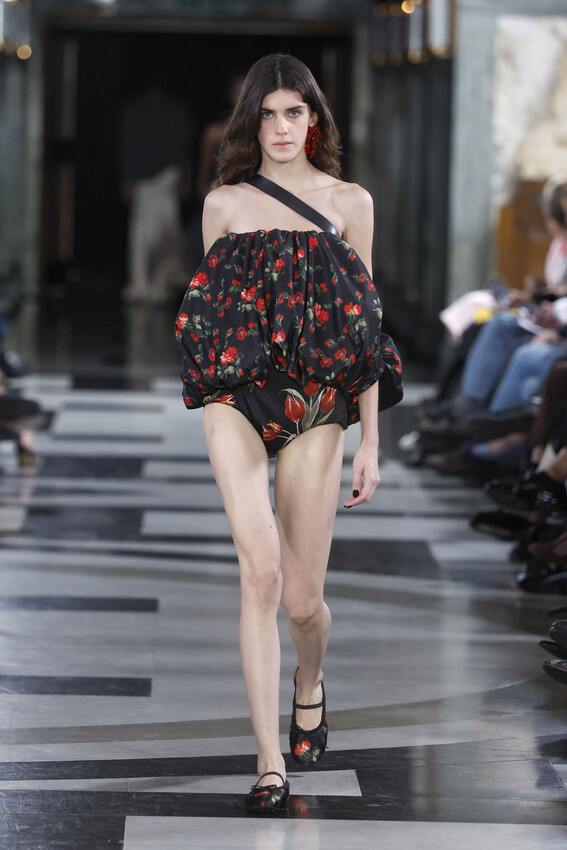
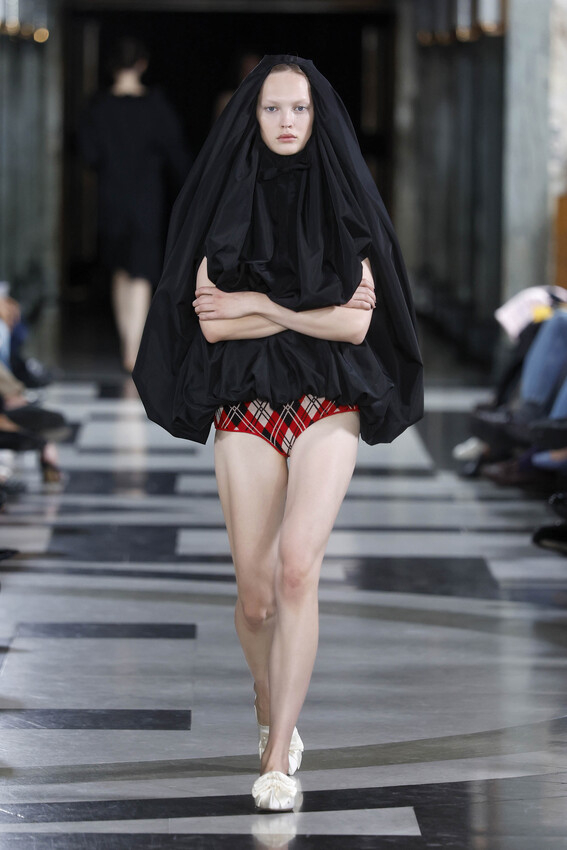
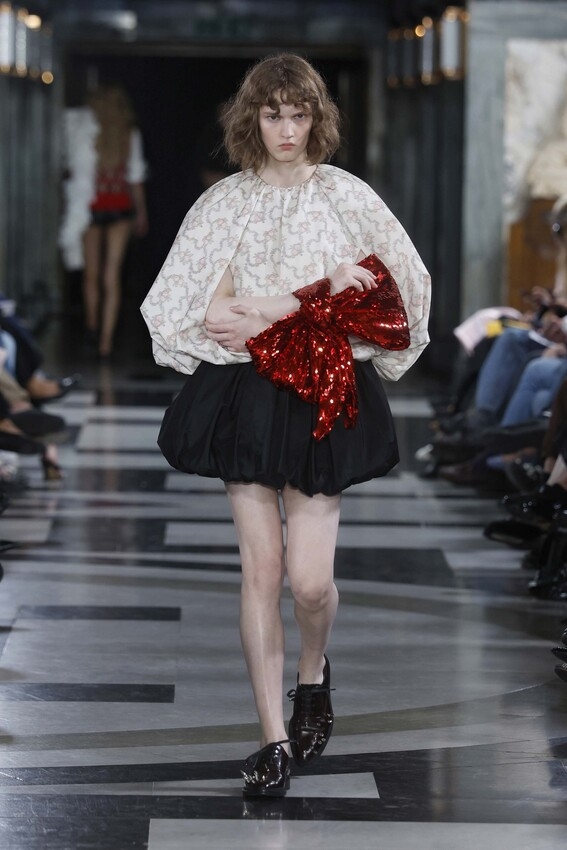
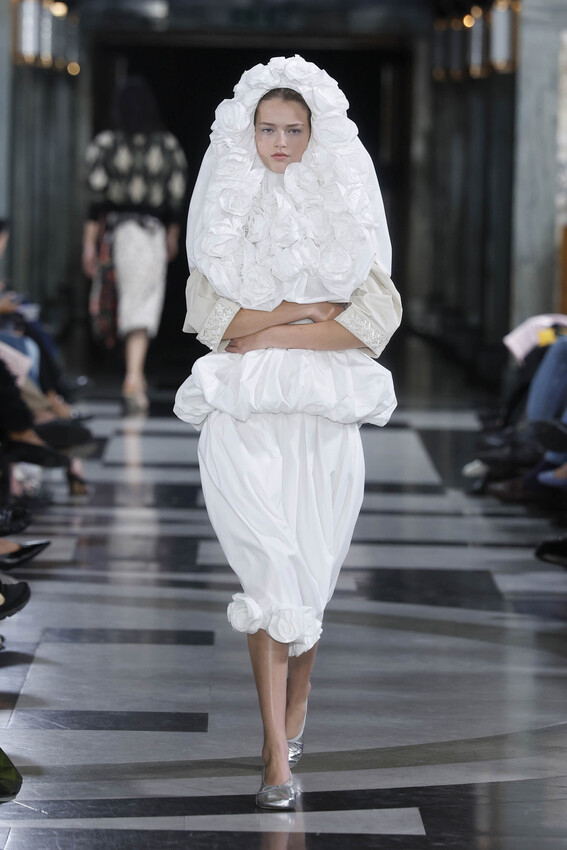
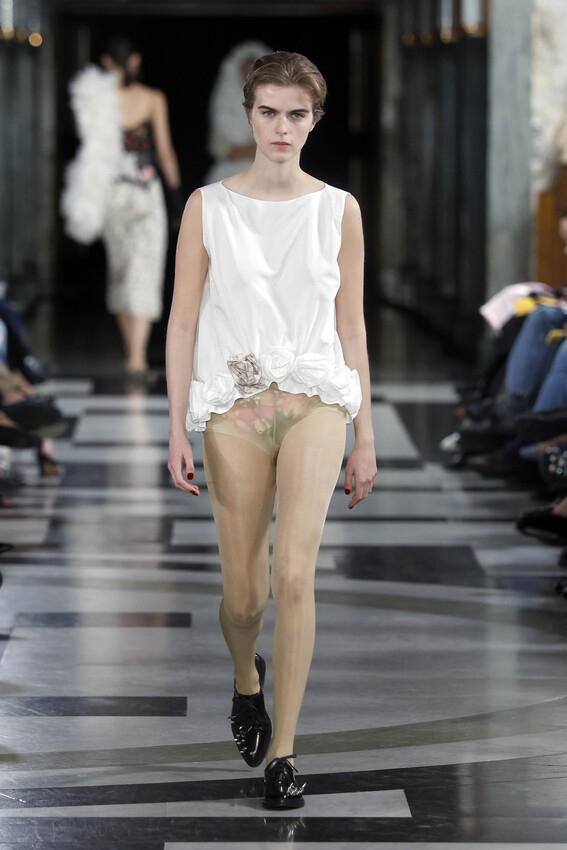
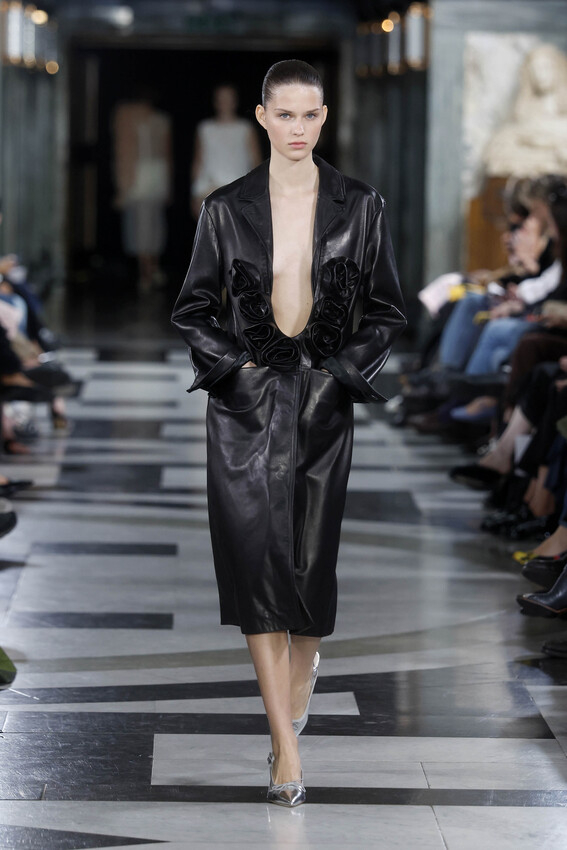
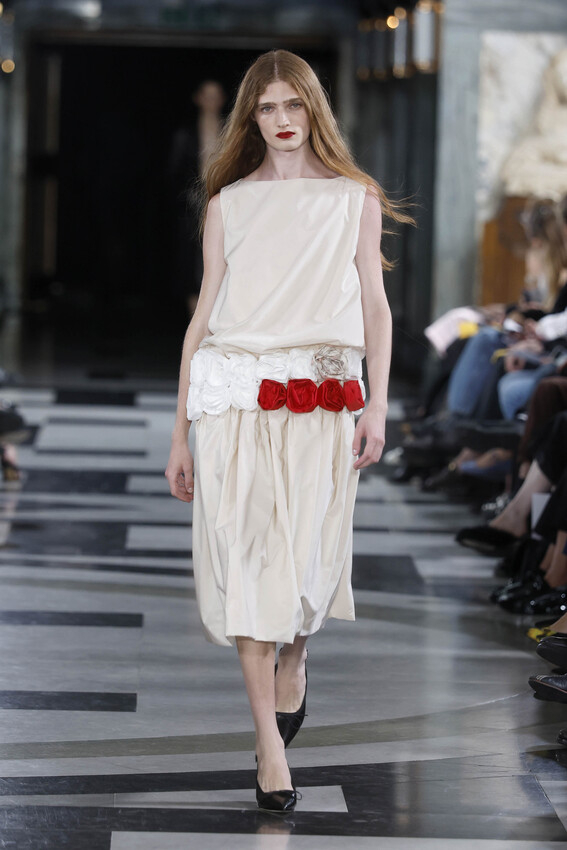
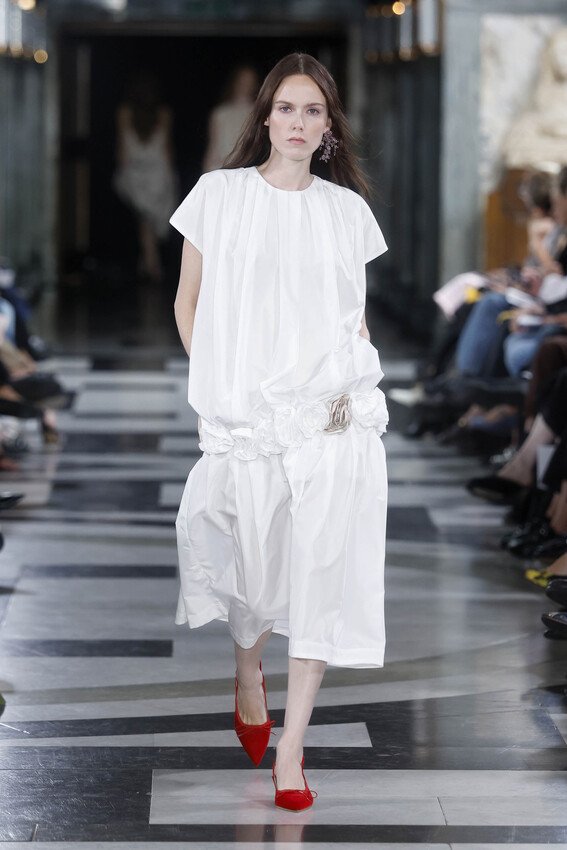
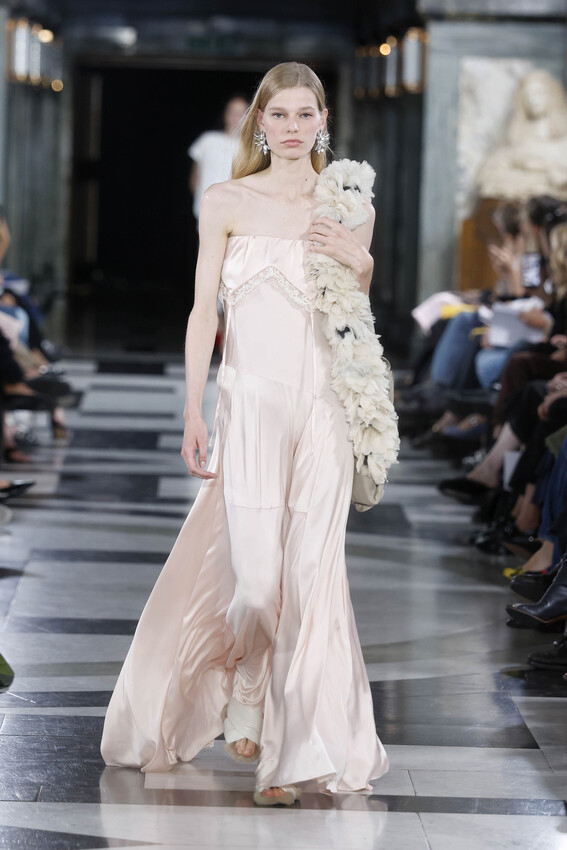
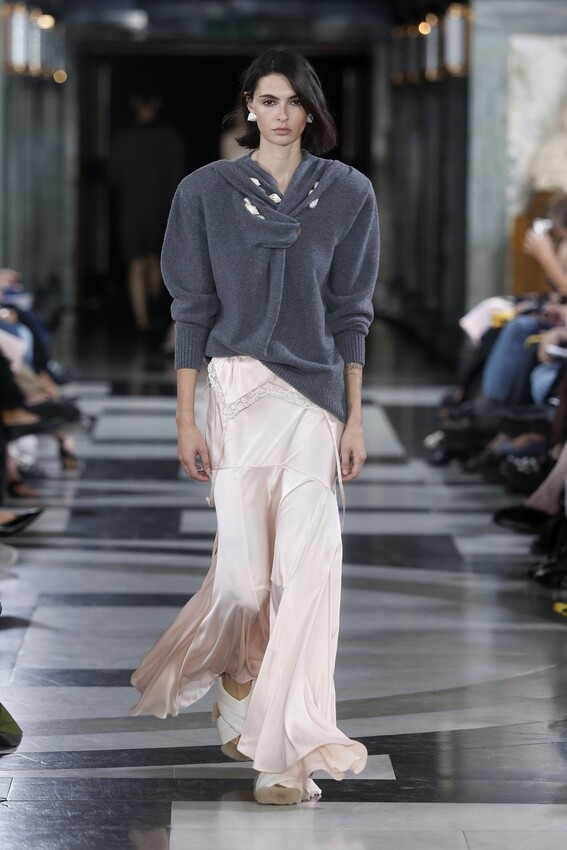
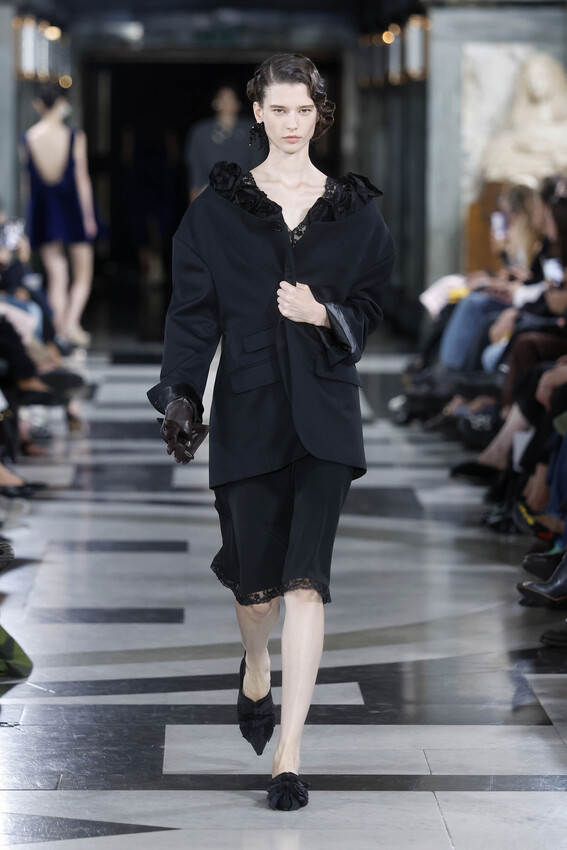
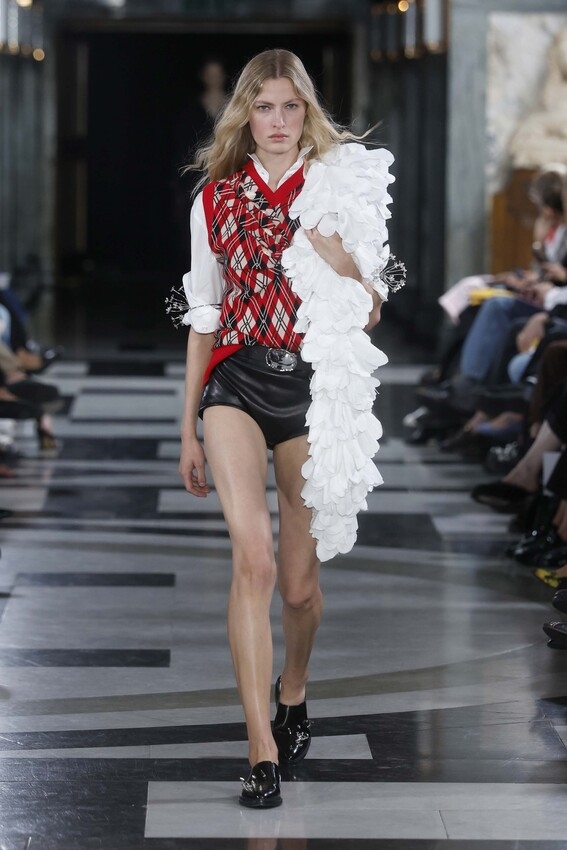
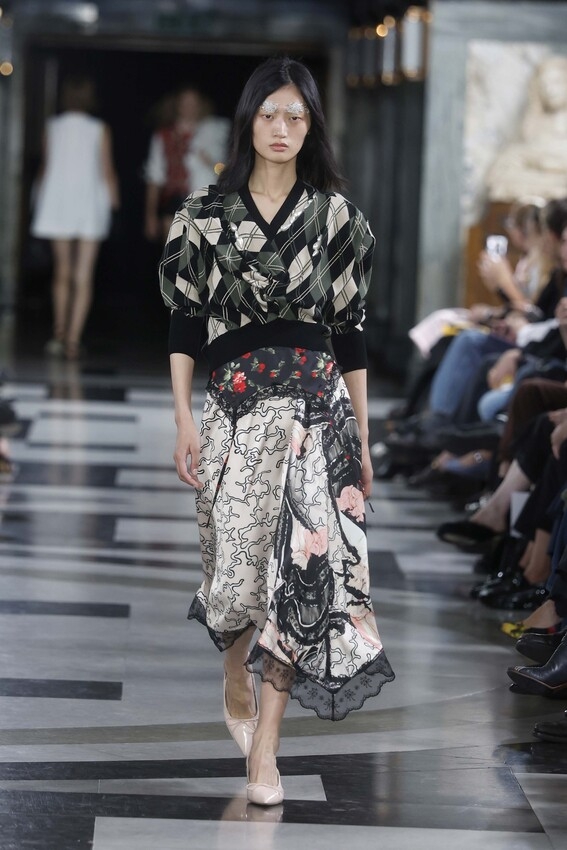
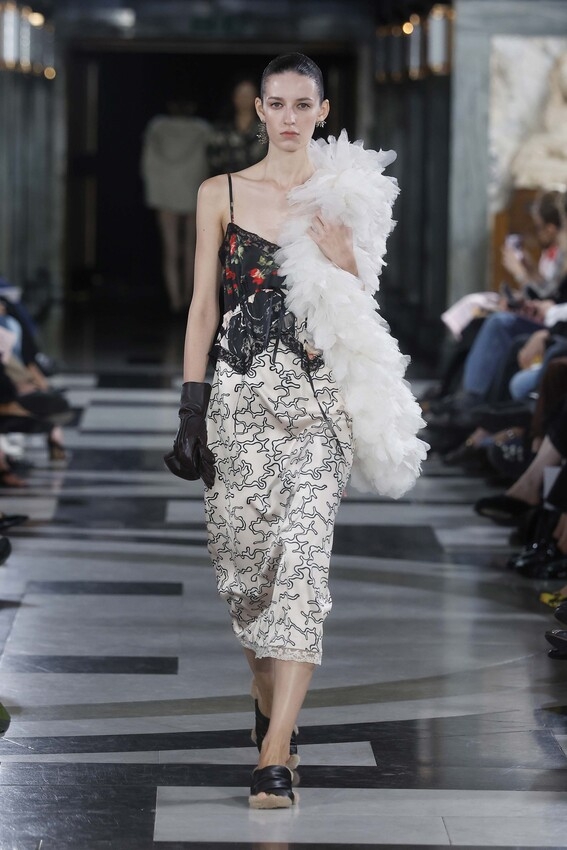
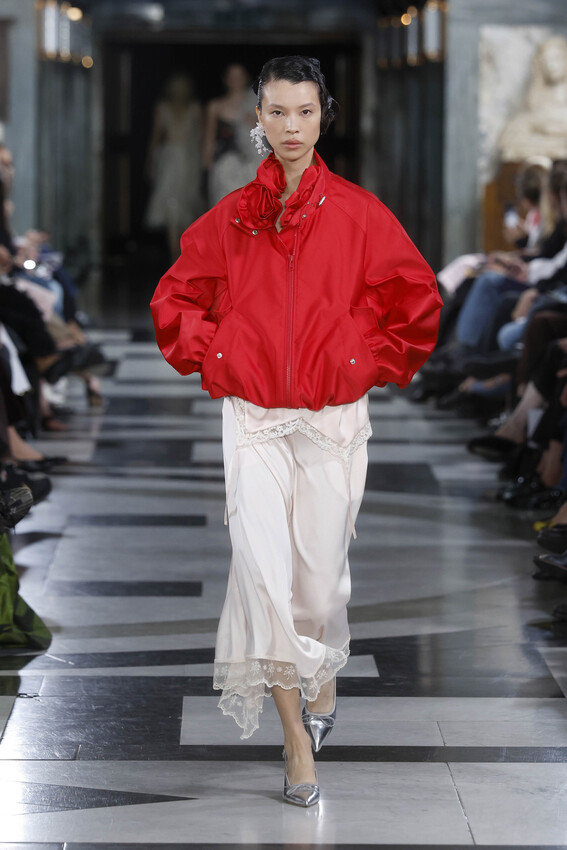
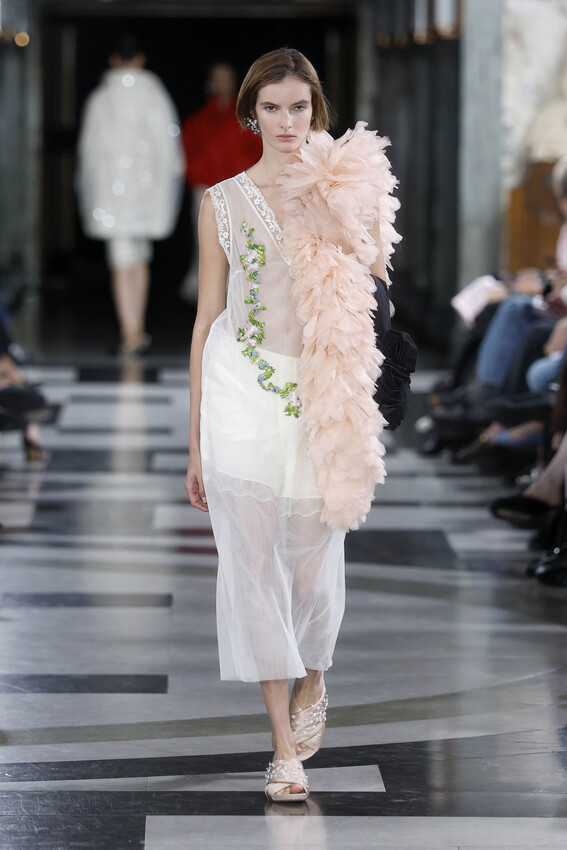
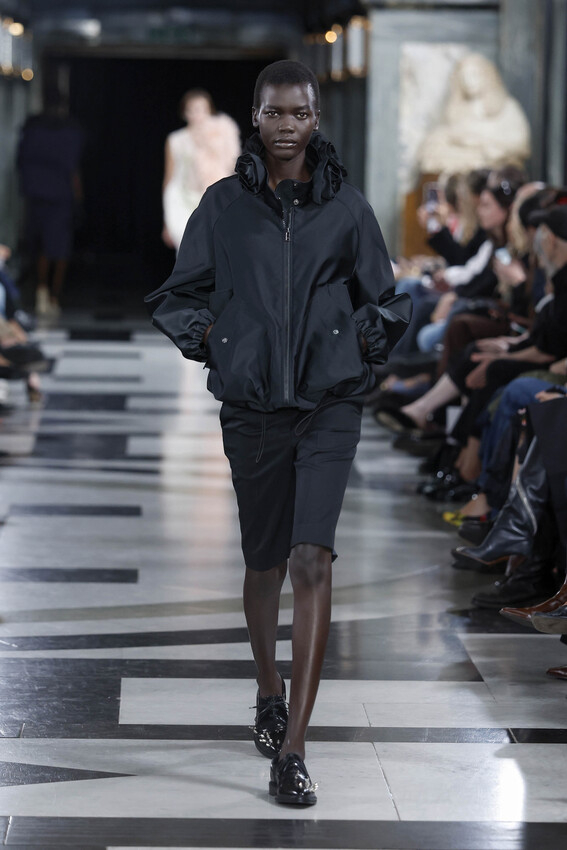
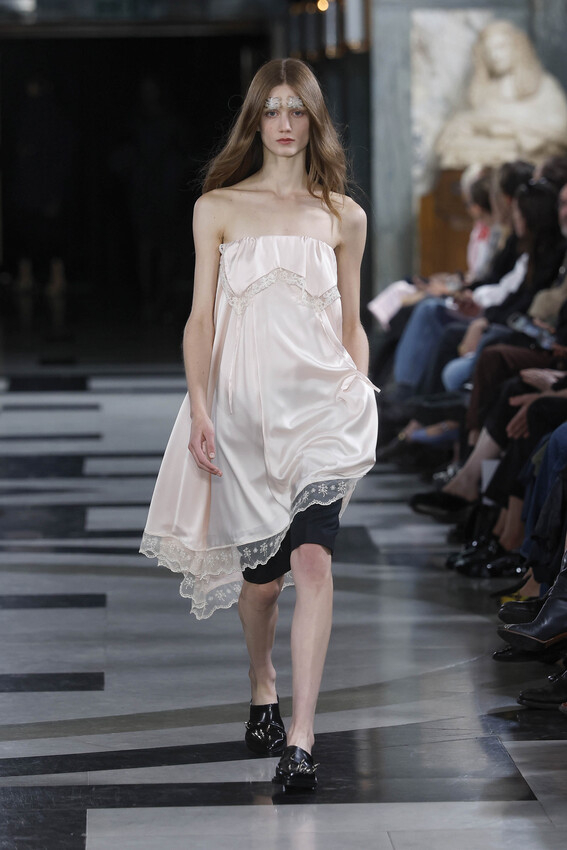
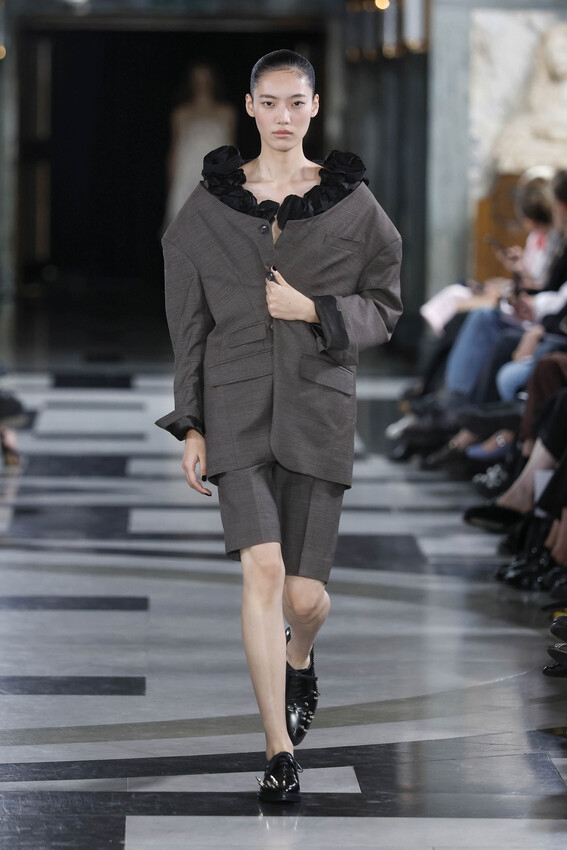
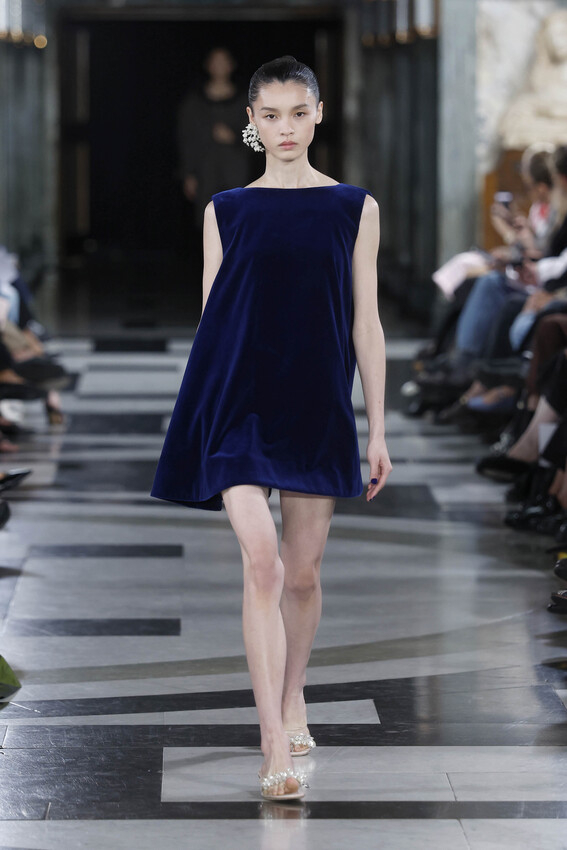
The collection itself revealed a designer settling into his own language. McGirr’s signature tailoring—sharp, angular shoulders paired with low-slung, relaxed trousers—anchored the show, providing a stark contrast to the diaphanous, wispy gowns that followed. These dresses, often rendered in abstract, faded tie-dye patterns, were designed to evoke the imagery of a reveler walking home at dawn, wind-swept and unburdened. The juxtaposition of these romantic, ethereal silhouettes with the grounded, industrial aesthetic of leather harnesses and metallic embellishments demonstrated a refined grasp of the McQueen ethos.
Technical precision was evident in the hand-pleated georgette gowns, which possessed a lightness reminiscent of a brushstroke. These pieces, particularly a striking blue number that mirrored the angel wings found in classical painting, showcased a level of craftsmanship that D’Attis is eager to emphasize. Yet, the collection was not without its experimental edges. The “angel wing” sleeves, while conceptually ambitious, struggled to achieve the intended dramatic flight, appearing somewhat constrained compared to the sheer confidence of the collection’s more streamlined tailoring.
The decision to return to London is, at its core, a move to reclaim the brand’s narrative. The city’s influence on the house is not just thematic; it is visceral. The “messily inspirational” nature of London—a place where high art and street-level subversion collide—is the very soil in which Alexander McQueen grew. Moving operations to a more intimate space on Bond Street and realigning the show schedule are tactical maneuvers, but they are also symbolic gestures meant to signal a renewed commitment to the house’s origins.
Observers noted the presence of influential figures such as Alexa Chung, Emma Corrin, and Caitríona Balfe, all of whom represent the intersection of high culture and contemporary relevance that the brand seeks to inhabit. Their presence, coupled with the subtle revival of the iconic skull motif—this time delicately embroidered onto a netted dress—suggests that McGirr is keenly aware of the weight of the legacy he manages. He is not running from the past; he is curating it.
The challenge for any creative director at a house as visionary and influential as McQueen is the constant negotiation between homage and innovation. The bar is set extraordinarily high, a reality underscored by the recent auction of a spring 2010 original for over $1.5 million. This figure serves as a reminder of the house’s enduring cultural capital. To operate within such a shadow requires a delicate balance: one must respect the ghosts of the past while ensuring the brand does not become a museum piece.
McGirr’s approach this season suggests he is finding that balance. By incorporating heritage British wools—sourced through a collaboration with the legendary Savile Row tailor Huntsman—and leaning into the textures of metallic florals and feathered panniers, he is pushing the brand’s aesthetic vocabulary forward. The collection felt like a coherent wardrobe, one that moves beyond the spectacle of the runway to offer pieces that are wearable, modern, and deeply rooted in the house’s technical heritage.
As the industry watches to see how the restructuring under D’Attis unfolds, the spring 2027 collection stands as a testament to the brand’s resilience. The move to London is a homecoming, but it is also a declaration of intent. It suggests that McQueen is no longer interested in competing on the terms of the global fashion circuit, but rather in defining its own terms, dictated by the history, craft, and subversive spirit that made it a legend in the first place.
Whether this momentum will sustain itself remains to be seen, as the fashion cycle is notoriously unforgiving. However, the energy at Lincoln’s Inn Chapel was undeniable. There was a sense that the house had stopped trying to be everything to everyone and had instead returned to the specific, challenging, and beautiful vision that allowed it to change the face of fashion in the first place. For now, the brand is home, and in that homecoming, it has rediscovered the courage to be itself.